
The Yokai Aesthetic: Why Japan's Oldest Monsters Keep Coming Back
A thousand years of Japanese monster art, from the Night Parade scroll to a 1776 encyclopedia of invented demons, and why the whole catalogue reads as cyberpunk in 2026.

By Dave Dion-Labrecque - Updated August 2026 - 8 min read
A customer emailed us in June with a photo of her tote bag. She had stuck a fox decal next to a sticker of a walking umbrella with one eye, and she wanted to know whether the two "belonged to the same universe." They do, sort of, and answering her properly took me down a research hole that lasted most of the summer. The yokai aesthetic is one of the few visual languages I can think of that has run continuously for roughly a thousand years without ever going fully mainstream in the West and without ever quite disappearing either. It survived scroll painting, woodblock printing, postwar manga, a Nintendo franchise, and now a wave of neon-soaked digital art. That kind of endurance is rare, and it usually means the thing is doing real cultural work.
What a yokai actually is, and why the category is so slippery
The word yokai (妖怪) gets translated as "monster," "demon," or "spirit," and none of those land cleanly. A closer read is: the thing that explains the gap. A sound in the house at 3 a.m. A path that feels wrong. A borrowed object that never comes back. Japanese folklore assigned a face to each of those gaps, and the faces accumulated over centuries into a bestiary that is less a mythology than a filing system for unease.
The taxonomy is genuinely strange once you look closely. Some yokai are animals with too many years on them: foxes, cats, raccoon dogs that have lived long enough to learn transformation. Some are humans who died wrong. And some are objects. A tea kettle, a lute, a straw sandal that has been kept for a hundred years and quietly develops opinions. The Victoria and Albert Museum has a nice short primer on how these creatures were sorted and depicted, and what struck me reading it is how little hierarchy there is. A thunder god and a haunted umbrella occupy the same conceptual shelf.

The image above is the ancestor of every yokai lineup you have ever seen. It depicts the Hyakki Yagyo, the Night Parade of One Hundred Demons, a procession that supposedly moved through the streets on certain summer nights. Anyone who saw it died, or was carried off, depending on the version. The parade is important because it established the format: not a single monster in a single story, but a crowd. A catalogue. That instinct toward the catalogue is exactly why the aesthetic ports so well into merchandise, trading cards, and sticker sheets nine hundred years later.
1776: the year the monsters got an encyclopedia
The turning point is a printmaker named Toriyama Sekien. In 1776 he published Gazu Hyakki Yagyo, "The Illustrated Night Parade of a Hundred Demons," and followed it with three more volumes through 1784. What he did was formally boring and culturally enormous: he gave each creature a full page, a name, a caption, and a consistent visual treatment. Scholars Matt Alt and Hiroko Yoda, whose translation Japandemonium Illustrated is the standard English edition, describe the result as a supernatural bestiary. You can page through scans of the original volumes on the Internet Archive, and I recommend it, because the layouts feel oddly modern. One subject, generous negative space, a spare background.
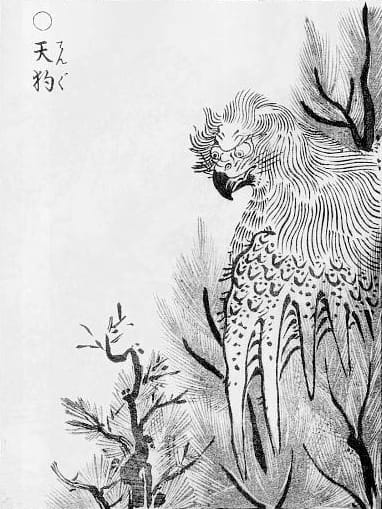
Sekien also did something that would get an artist dragged online today. He invented creatures. A meaningful share of the entries in his later volumes appear to be his own inventions, dressed in the same authoritative encyclopedia format as the genuinely old ones, sometimes built out of a pun or a line of poetry. Within a couple of generations, nobody could tell the difference, and his fabrications were absorbed into the folk tradition as though they had always been there. The lesson we keep returning to in the studio is that a canon is mostly a question of presentation. Give something a page, a name, and a straight face, and time does the rest.
The grammar underneath: transformation, patience, and grudge
Once you have looked at a few hundred of these images, the rules start to surface. Three of them do most of the work.
Transformation is earned, not given. A fox does not begin with nine tails. It grows one roughly every century, and the ninth marks something close to divinity. The bakeneko cat, the tanuki, the hundred-year kettle: the pattern is always duration first, power second. This is a folklore built by people who watched objects and animals persist longer than humans did.
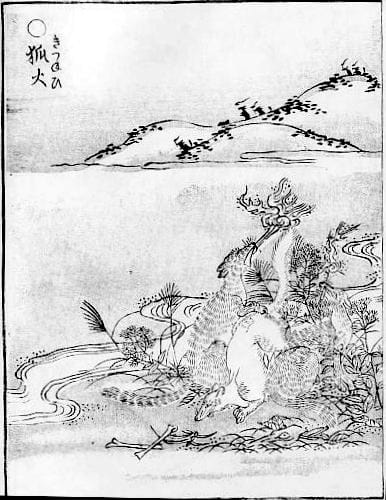
Light is a warning, not a comfort. Kitsune-bi, the floating fox fire above, is the folklore explanation for lights seen at a distance over fields at night. The consistent message across dozens of tales is that the glow is a lure. We ran into the same logic when we researched the visual language of bioluminescence last spring: deep-sea anglerfish and Edo-period fox spirits arrived at an identical narrative, several thousand kilometres and several centuries apart.
Those rules also explain the regional spread. The kappa, the river imp with a water-filled dish on its head, exists in dozens of local variants with different names, diets, and weaknesses, because every river town needed its own version of the warning. Folklore scholars generally read the kappa as a drowning deterrent aimed at children, which is a fairly bleak origin for a creature now sold as a plush toy. Most of the catalogue works this way. A practical fear, given a face, then softened by three centuries of retelling until the face is all that survives.
Emotion outlives the body. The yurei, the long-haired ghost in white, is not scary because she is dead. She is scary because a feeling refused to resolve. Grudge, grief, and shame are treated as substances with a half-life. Compare this to the Western haunted house, where the horror is usually a place. In Japanese folklore the horror is far more often an unfinished sentence.
From woodblock to widescreen
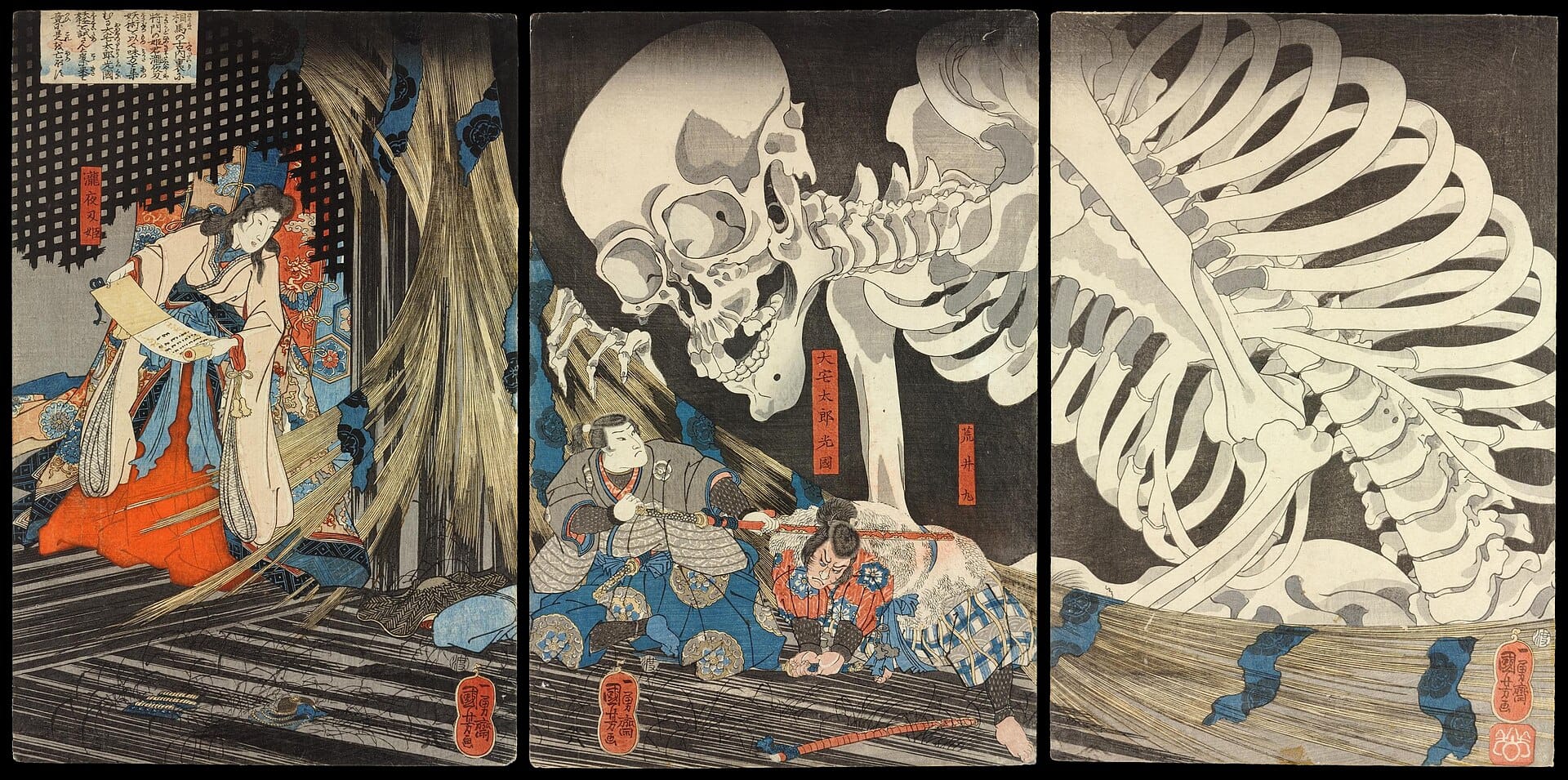
The nineteenth century is where the aesthetic got its scale. Utagawa Kuniyoshi's print of Takiyasha the witch summoning a giant skeleton, made around 1844, is the single most influential yokai image ever produced. Kuniyoshi did something the older scrolls never attempted: he blew one creature up until it broke the frame. The skeleton pushes through a torn blind, too large for the composition, and the whole print becomes about that pressure.
Everything after inherits that framing. Mizuki Shigeru's postwar manga turned the bestiary into a cast of characters and made yokai lovable rather than lethal. Yo-kai Watch, from 2013, handed the whole catalogue to children with rounded edges and a collection mechanic. And in 2026 the loop closed in an obvious way: a large-scale immersive exhibition ran at Warehouse Terrada in Tokyo from late March through June, projecting Edo and Meiji period monster paintings across walls at architectural scale, with original works on loan from museums and libraries alongside the projections. The Japan Times covered the show in April, and the framing that stuck with me was that these creatures have always been a technology for handling the unknown. Every era just runs them on different hardware.
Why the yokai aesthetic reads as cyberpunk in 2026
Here is the thing that took me longest to work out. When contemporary artists put yokai in neon and chrome, it does not feel like a costume change. It feels correct. I spent a while assuming this was just the anime pipeline flattening two Japanese visual traditions into one shelf, and I no longer think that is the explanation.
The real overlap is the tsukumogami. In folklore, an object that reaches a hundred years of age acquires a spirit. That is a premise about the interior life of manufactured things, arrived at in the fifteenth century, and it is almost exactly the anxiety we now attach to devices. Your phone knows your sleep schedule. Your car objects to your driving. The tsukumogami is not a metaphor for the smart object. It is the same idea, four hundred years early.
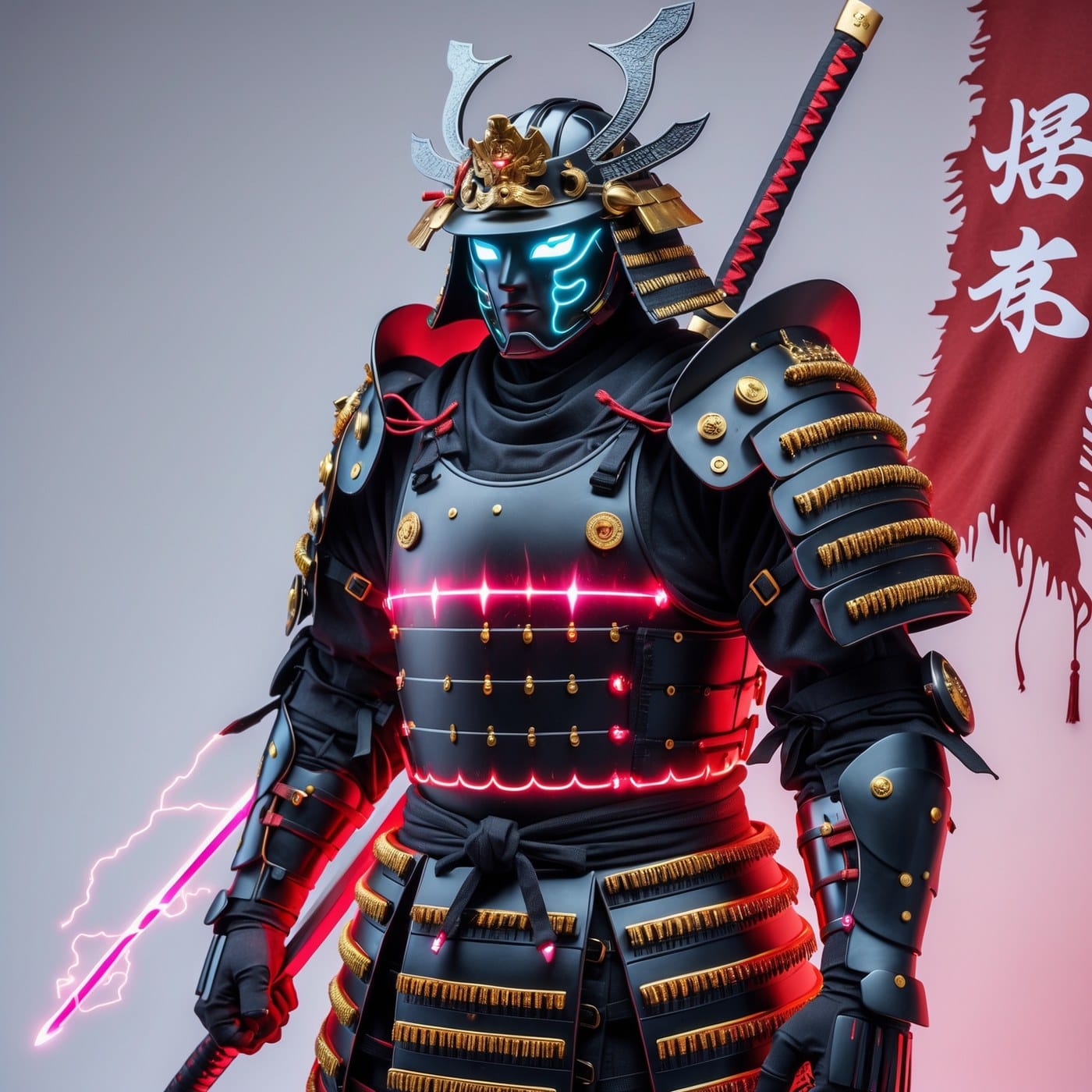
The palette follows from that. Yokai were nocturnal by definition, described in lantern light and moonlight against dark ground. Neon is what nocturnal looks like now. Swap the paper lantern for a signboard and the light behaves the same way: a small saturated source, deep shadow around it, edges you cannot quite resolve. That is also why the aesthetic sits so comfortably next to the liminal spaces of dreamcore. Both are built on the idea that an ordinary place changes species after dark.
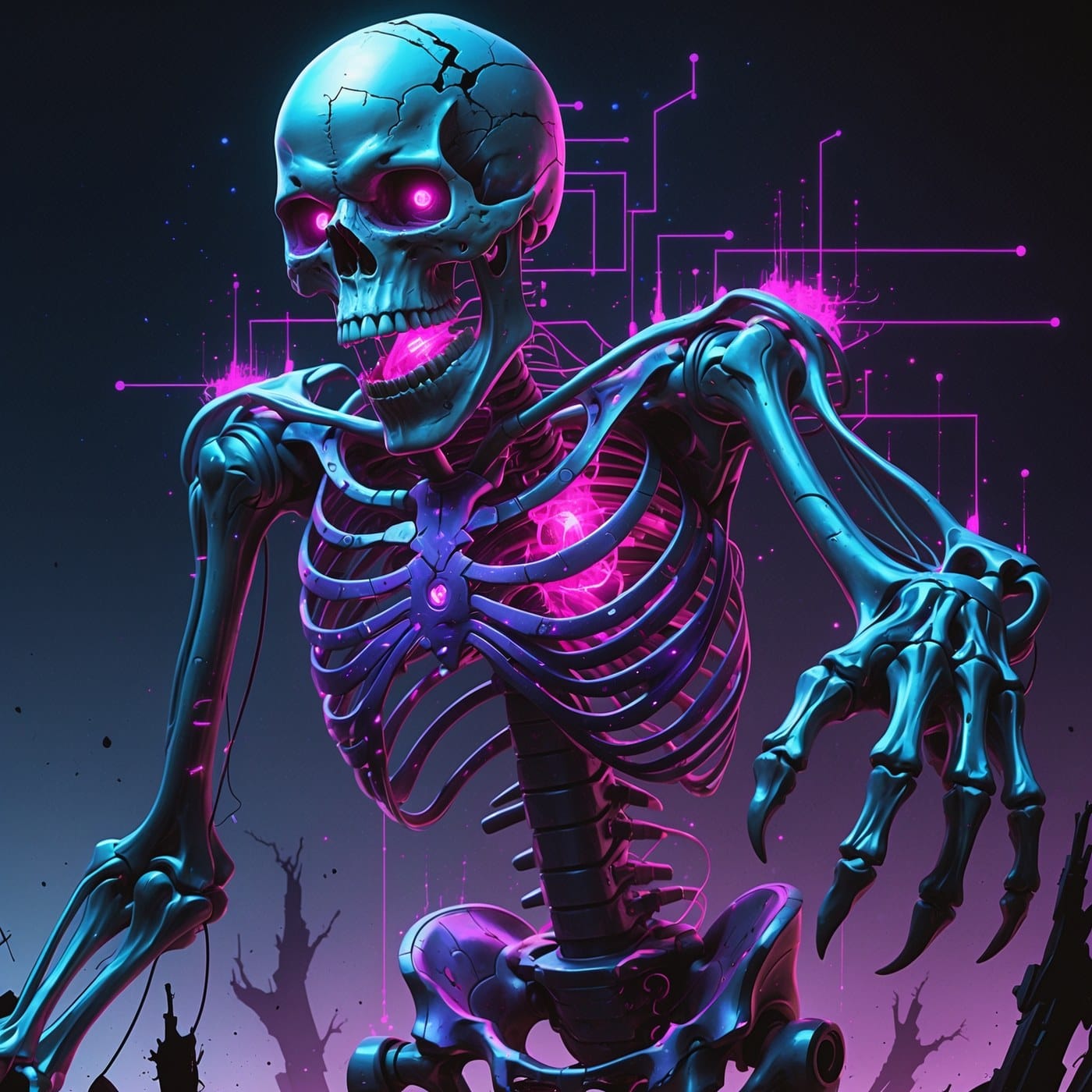
There is a commercial reason too, and it is worth naming honestly. The yokai canon is enormous, mostly public domain, visually distinctive, and pre-sorted into collectible units. Every one of the trend cycles we have tracked this year, from aliencore to mushroomcore, has rewarded exactly that combination. Sekien built a franchise bible in 1776 and did not know it.
Frequently asked questions
Is the yokai aesthetic the same as Japanese horror?
No. J-horror is a film genre built largely on the yurei, one branch of the tree. The yokai aesthetic covers the whole catalogue, and a great deal of it is comic, mischievous, or affectionate rather than frightening.
Are yokai religious figures?
Mostly not, though the line is blurry. Kami are worshipped at shrines. Yokai are explained, feared, laughed at, and occasionally negotiated with. A few, such as certain fox spirits and thunder deities, sit on the boundary between the two categories.
Where can I see original yokai artwork?
The Sekien volumes are freely scanned on the Internet Archive. Museum collections in Japan, the UK, and the US hold Kuniyoshi and Kyosai prints, and the V&A keeps an accessible introduction online. Most Edo-period material is out of copyright.
Why do so many yokai come from objects?
The tsukumogami concept holds that tools kept for about a century acquire a spirit, partly as a moral point about waste and neglect. It produced some of the strangest entries in the entire bestiary, including sandals, lanterns, and scrolls with faces.
Wearing the night parade
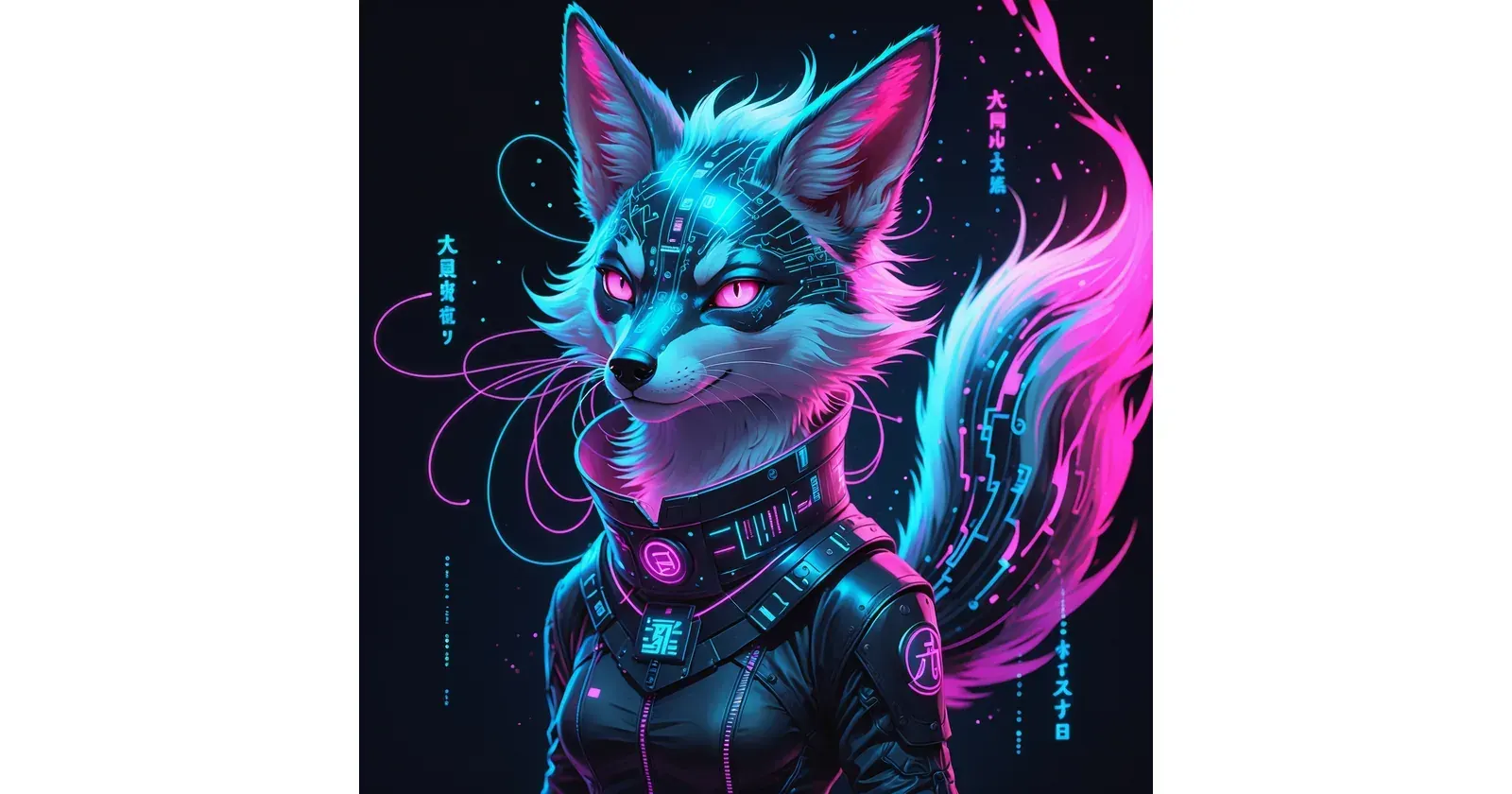
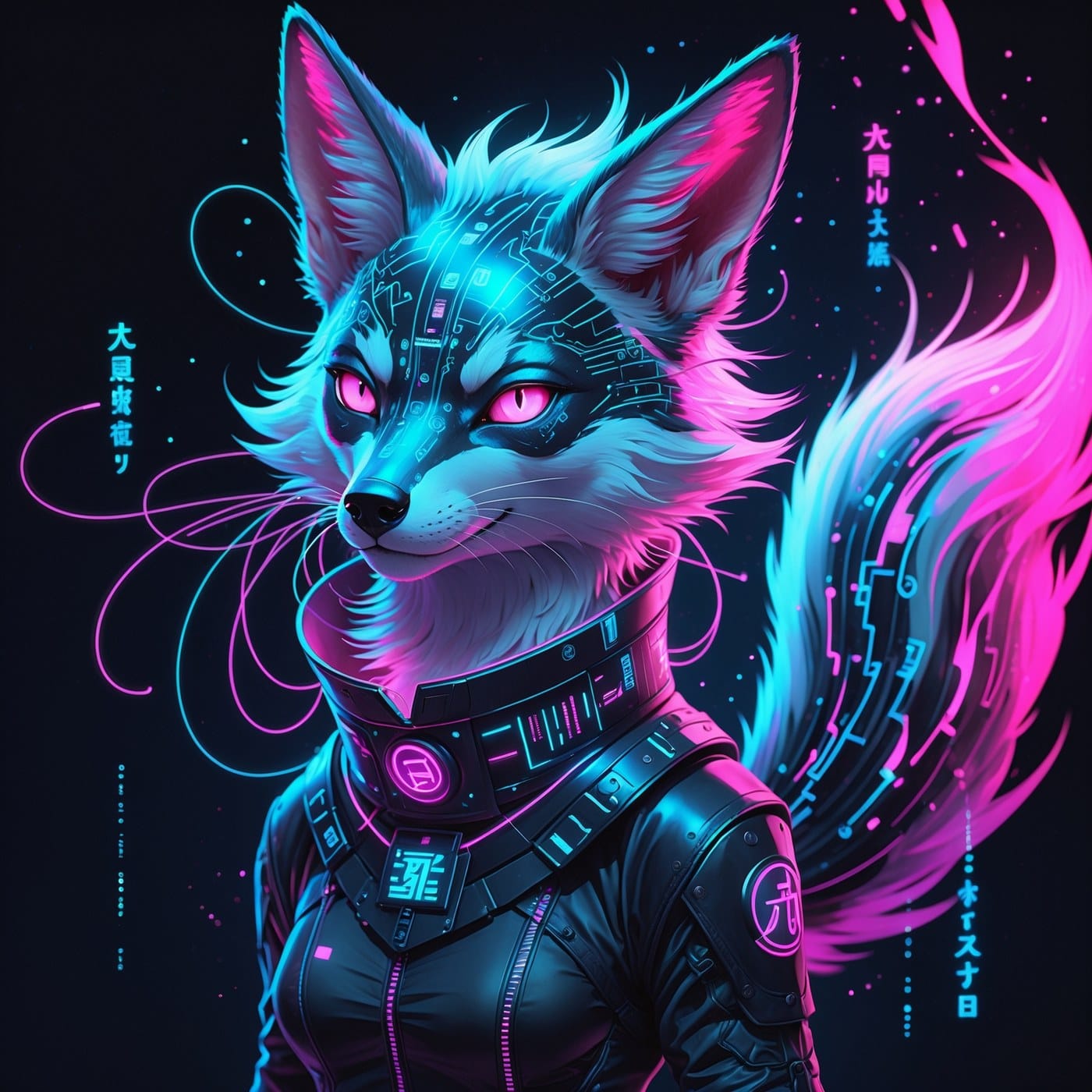
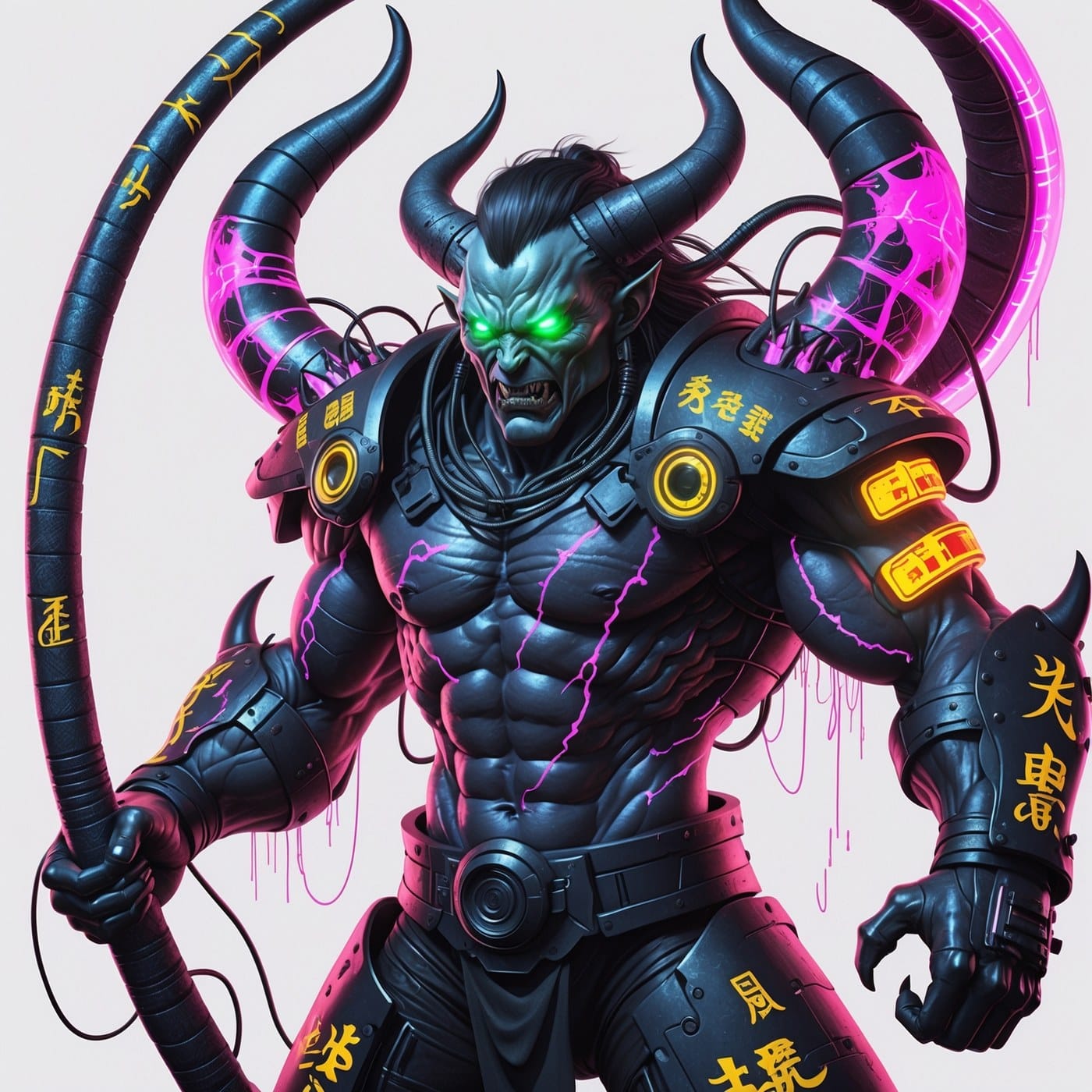
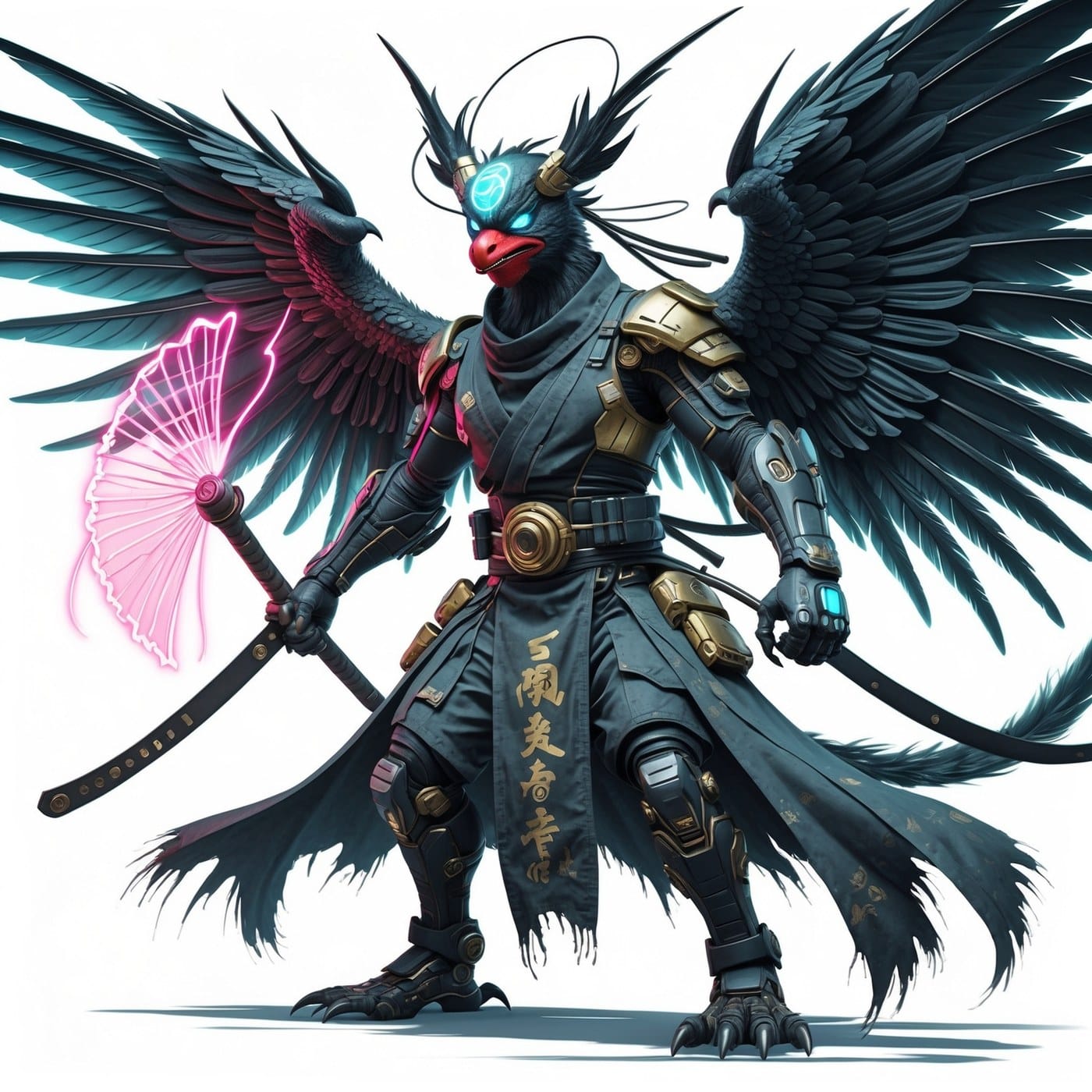
We built our Yokai Protocol collection around this exact collision, one creature per design, encyclopedia style, with the chrome and circuitry treatment that the tsukumogami logic seemed to ask for. Kitsune, oni, tengu, gashadokuro, and a dozen more, each given a full page the way Sekien would have done it. If the folklore side of this article is what interested you, the artwork is where we tried to answer it visually rather than in prose.
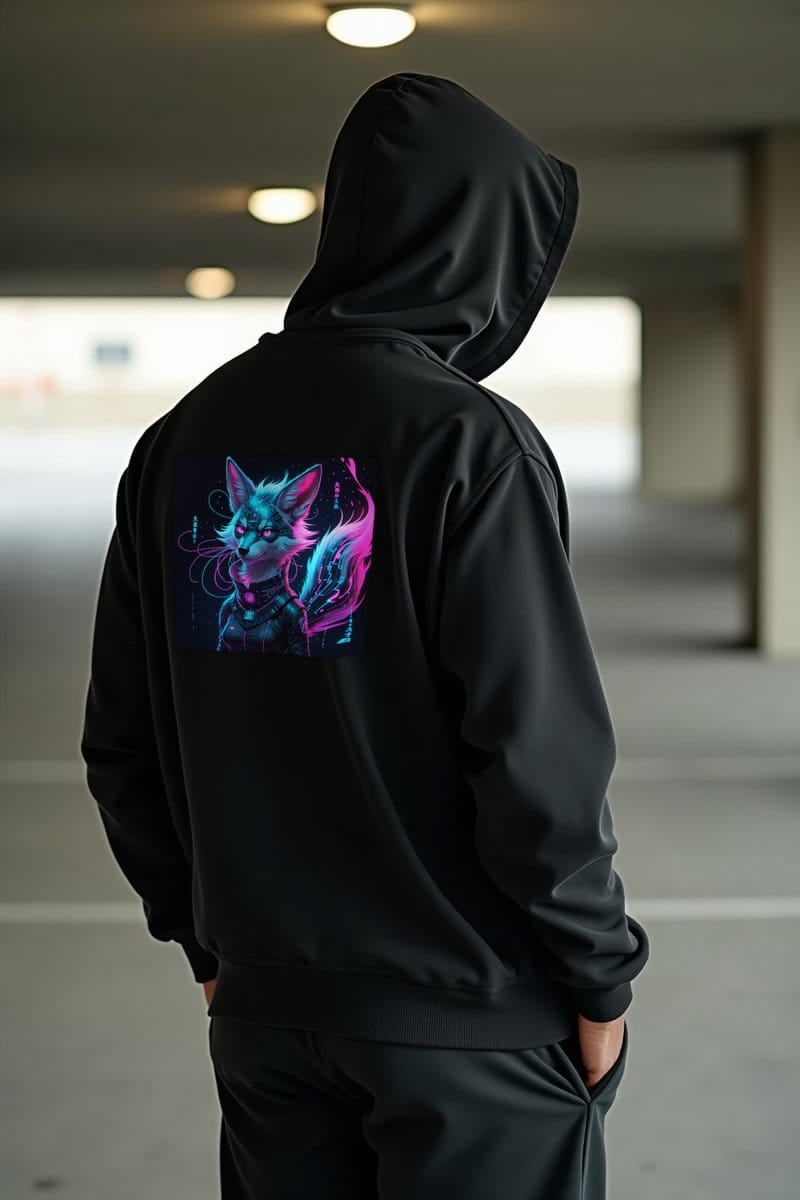
See the Yokai Protocol collection
🎨 Original designs featured in this article are AI-generated and curated by The Design Drop. External photographs and illustrations are credited individually where used.
Love what you see?
Get free designs, exclusive deals & curated gift guides every week.
Subscribe to The Design Drop - it's free!