
Glow in the Deep: The Aesthetic of Bioluminescence and Why Fashion Keeps Returning to the Abyss
A cultural deep-dive on the bioluminescent aesthetic — from Aristotle's 'cold fire' to Iris van Herpen's living algae dress — and why fashion keeps returning to the abyss.

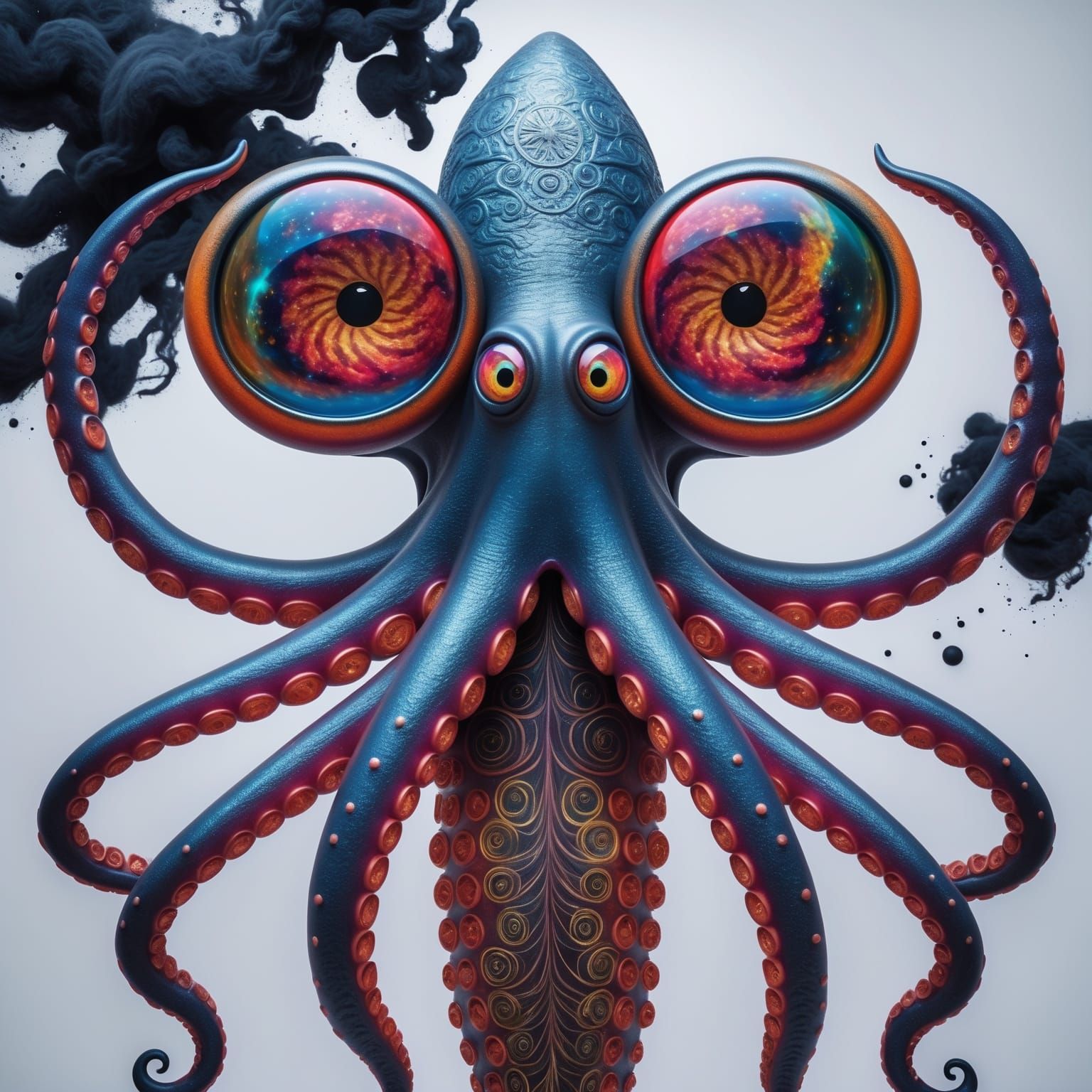
In June 2012, somewhere off the Ogasawara Islands south of Tokyo, a marine biologist named Edie Widder lowered a strange-looking instrument into a kilometre of black water. It was a three-foot cube called the Medusa, fitted with low-light cameras and a ring of red LEDs that deep-sea animals cannot see. Dangling beside it was something she had built herself — an electronic decoy that mimicked the blue spinning-pinwheel flash a wounded jellyfish gives off when it is being torn apart. After three decades of work, Widder believed that this signal, a kind of distress flare evolved into a hunting tool, would call up the one creature no one had ever managed to film alive.
It did. On the fifth deployment, an Architeuthis dux — a giant squid — drifted into frame, ran its arms along the camera housing, and slid back into the dark. That clip changed what oceanography understood about how to find the deep sea's largest invertebrate. It also, very quietly, did something else. It reminded a generation of designers, illustrators and stylists that the most cinematic moment in living biology is not the moment a creature is illuminated by a spotlight. It is the moment a creature illuminates itself.
I have been thinking about Widder's footage ever since I started seeing the same handful of references — her squid clip, Iris van Herpen's algae dresses, the cyan smudges on Pinterest tagged abyssalcore — keep surfacing in the moodboards of designers working in 2026. The pull toward the bioluminescent is not a microtrend. It is one of the longest-running aesthetic obsessions humans have, and it is having a very particular moment right now. Here is what we noticed when we mapped its history, its biology, and the way it is bleeding into clothing.
A short history of humans glowing in the dark
The Greeks were already trying to figure this out. Aristotle, in his treatise On the Soul and later in De Coloribus, kept circling back to the strange light that came off rotting wood and certain marine animals. He called it "cold fire" and could not explain it. Pliny the Elder, a couple of centuries later, described the milky glow on the wakes of Roman ships and the green fire that came off certain mushrooms. Neither of them got the chemistry right — that would take another eighteen hundred years — but both understood that something living was producing light, and that this fact deserved a name.
The Romantic period rediscovered glowing things as a literary device. Coleridge's Rime of the Ancient Mariner describes the sea burning at night in "still and awful red." A few decades later Jules Verne, writing Twenty Thousand Leagues Under the Seas in 1869, used phosphorescence as a recurring image — the Nautilus itself first appears to startled sailors as "a long object, spindle-shaped, occasionally phosphorescent, and infinitely larger and more rapid in its movements than a whale." Verne understood something modern designers would only catch up to a hundred years later: the deep sea is more frightening, and more beautiful, when it lights itself.

The twentieth century buried bioluminescence under neon. Las Vegas and Tokyo perfected the artificial glow. Glow sticks at raves. UV-reactive paint at warehouse parties. Tron. Blade Runner. Then in 2009, James Cameron's Avatar did something almost no film had attempted at scale — it made an entire forest light up from below, designed in close consultation with images of real glow worms in New Zealand's Waitomo Caves and dinoflagellate-rich bays. Pandora's night forest became, more or less overnight, the dominant visual reference for "magical wilderness" in commercial illustration for the next decade.
By 2024, the references began to specifically refuse the artificial version of glow. Mood boards moved away from neon-as-signage and toward neon-as-organism. The microtrend that aesthetic communities on Pinterest and TikTok now call "abyssalcore" — gathered on dedicated boards, taxonomised on the Personal Aesthetics Wiki — leans hard into the deep sea between the abyssopelagic and hadalpelagic zones. It is the cousin of mermaidcore, but its references are darker, weirder, and biologically specific: jellyfish, anglerfish, vampire squid, the slow drift of organic matter falling through black water. Where mermaidcore is solar and warm, abyssalcore is cold, slow and electric.
Why three-quarters of the deep sea glows
Here is the fact that breaks most people's brains the first time they hear it. Roughly 76 percent of all ocean animals make their own light, according to a 2017 Scientific Reports study led by MBARI researchers. That figure climbs above 90 percent in the mesopelagic zone — the so-called twilight layer between 200 and 1,000 metres — and tapers to around 25 percent in the bathypelagic, the true midnight zone below. Counting only by individual animals, bioluminescence is almost certainly the most common form of communication on Earth. We just happen to live in the small slice of the biosphere where the sun does the talking.
The chemistry is shared and elegant. A small molecule called luciferin reacts with an enzyme called luciferase in the presence of oxygen. The reaction produces an excited intermediate that drops down to a stable state by emitting a photon. There is essentially no waste heat — which is why bioluminescence is sometimes called "cold light" — and the colour depends on the exact luciferin in use. Most marine bioluminescence comes out blue or cyan because blue light travels furthest through seawater. Greens and reds exist, but they are rare.
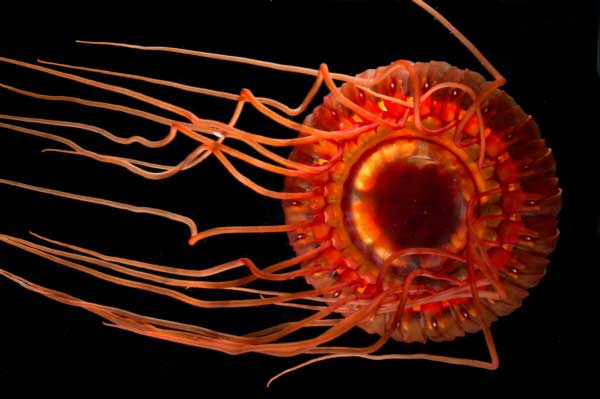
The functions are basically three. Defense — like the Atolla wyvillei jellyfish, whose burglar-alarm trick is exactly the signal Widder reverse-engineered into her decoy. When something attacks an Atolla, it fires a spinning ring of blue light that, in theory, attracts a bigger predator to come eat the original attacker. It is one of the most ruthless escape strategies evolution has produced.
.jpg?ref=designdrop.ghost.io)
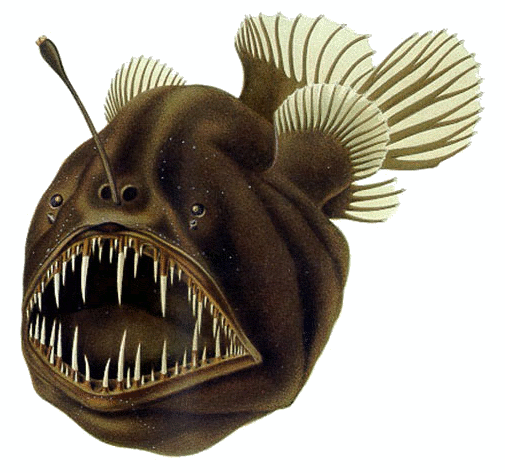
Offense — like the deep-sea anglerfish, which dangles a colony of bioluminescent Photobacterium in a lure called the esca. The bacteria glow; small fish swim up to investigate; the anglerfish does not need to chase anything. The Smithsonian Ocean Portal has the cleanest write-up of how that symbiosis works if you want to go deeper.

Mating, the third function, is what produces some of the most precise displays — ostracod crustaceans release timed sequences of blue droplets like underwater Morse code, and certain dragonfish even emit red light. Almost no other deep-sea animal can see red, which means they hunt with a private flashlight.
I think this is where the aesthetic gets its grip. The deep sea is not glowing for us. It is glowing for itself, in a language we cannot fully read, using a chemistry older than the eye. There is something irreducibly humbling about that, and humbling is a feeling fashion almost never gives you.
From microscope to mannequin
Bioluminescence as direct fashion reference begins, more or less, with Iris van Herpen. Her 2019 collection Hypnosis already pulled from coral and jellyfish, with iridescent layered silks that moved like medusae in water. But the line everyone is now studying is her July 2025 haute couture collection Sympoiesis, shown in Paris. The headline piece was a long, columnar dress containing 125 million bioluminescent dinoflagellates — actual living algae, kept in a nutrient gel inside transparent biomaterial — that flashed pale blue in response to the model's movements. The piece had to be transported in a refrigerated truck. The dressing room had wireless humidity alarms running under red light to keep the algae alive. Designboom's write-up goes into the build process if you want the engineering details. The dress, in other words, was a tiny ecosystem, and watching it walk down the runway was the closest thing fashion has produced to a piece of marine biology.
The mainstream brands followed at scale. Diesel's autumn 2024 campaign leaned into a deep-aquatic palette of inky blacks and electric jellyfish blues. Acne Studios' Spring 2025 lookbook included translucent layered tops with silver-threaded prints that read as bioluminescent at distance. Mugler, Coperni and a half-dozen smaller independent labels have all run shows in the past eighteen months that pulled the same colour palette — abyssal blue, phosphorescent green, jellyfish violet — out of nature documentary territory and into clubwear and ready-to-wear.
The aesthetic also escaped fashion proper. Stage lighting designers for tours by Caroline Polachek and FKA twigs in 2025 referenced the Atolla alarm flash directly. The cover art for several major electronic releases borrowed from anglerfish illustrations and from those eerie photographs of red shrimp ejecting clouds of bioluminescent goo into the water column. The reference is everywhere, and once you start seeing it you cannot unsee it.
The visual codes, if you want to read them
If you strip back what is now wearable and ask what makes a piece read as belonging to this aesthetic versus a generic dark palette, three signals do most of the work.
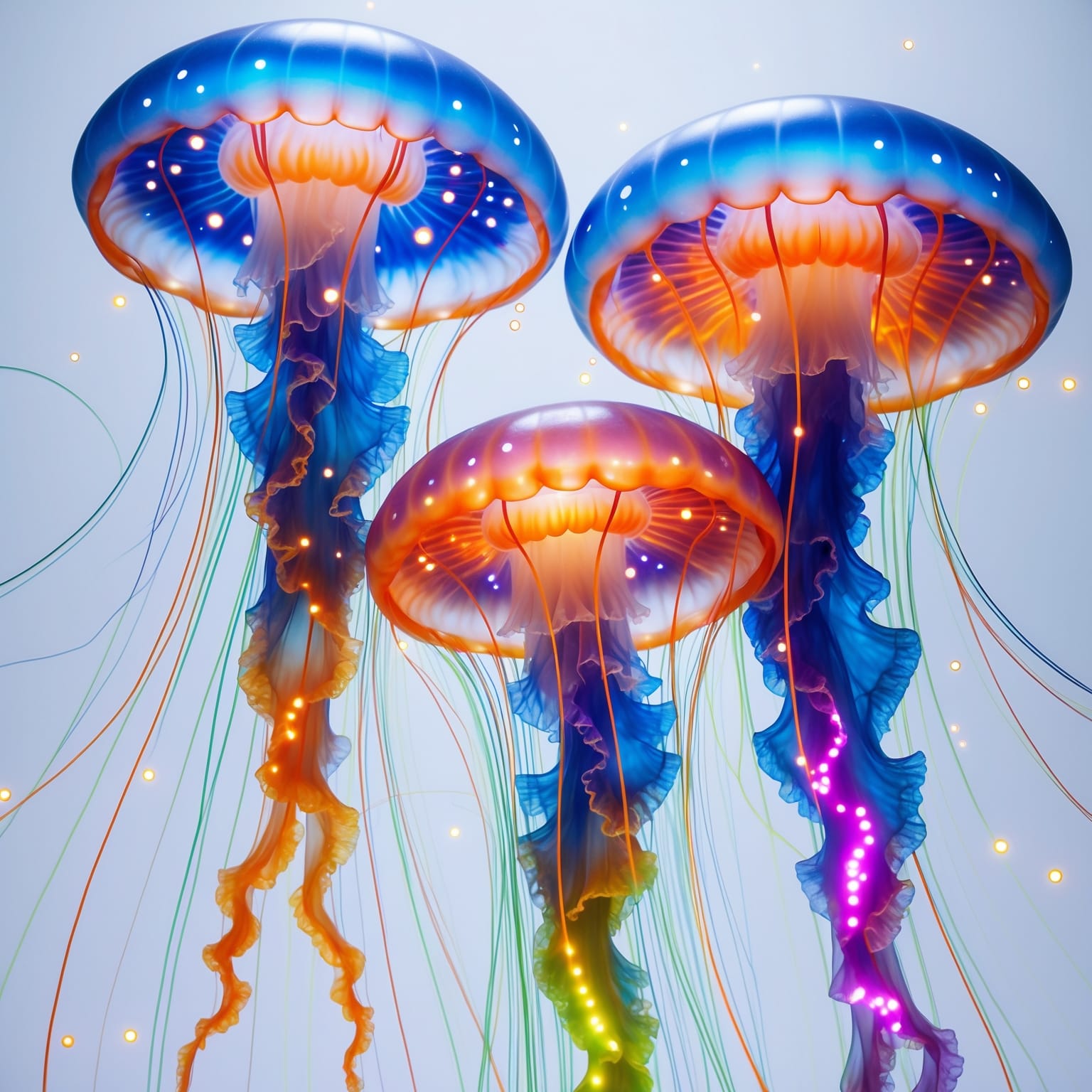
The first is colour. The signature combinations are not random. They reproduce, almost without exception, the actual emission wavelengths of marine bioluminescence — peak intensity around 470 to 490 nanometres, which the human eye reads as a particular cyan-leaning blue. Paired with ink black or deep navy, it produces the effect of light coming out of darkness rather than light placed on top of it. Add phosphorescent green (the Pyrosoma tunicate range) or jellyfish violet (the Atolla red-into-violet bell) and the palette becomes unmistakeable. Avoid warm whites. Avoid solar yellows. The light has to feel cold.
The second is texture and finish. Iridescent layers, mesh, sheer overlays, silk that catches light at oblique angles, vinyl with a slight pearl shimmer — these all simulate the way light passes through a transparent or semi-transparent body rather than reflecting off it. This is also why holographic finishes, which have a metallic baseline, almost never look right in this aesthetic. The reference is jelly, not foil.
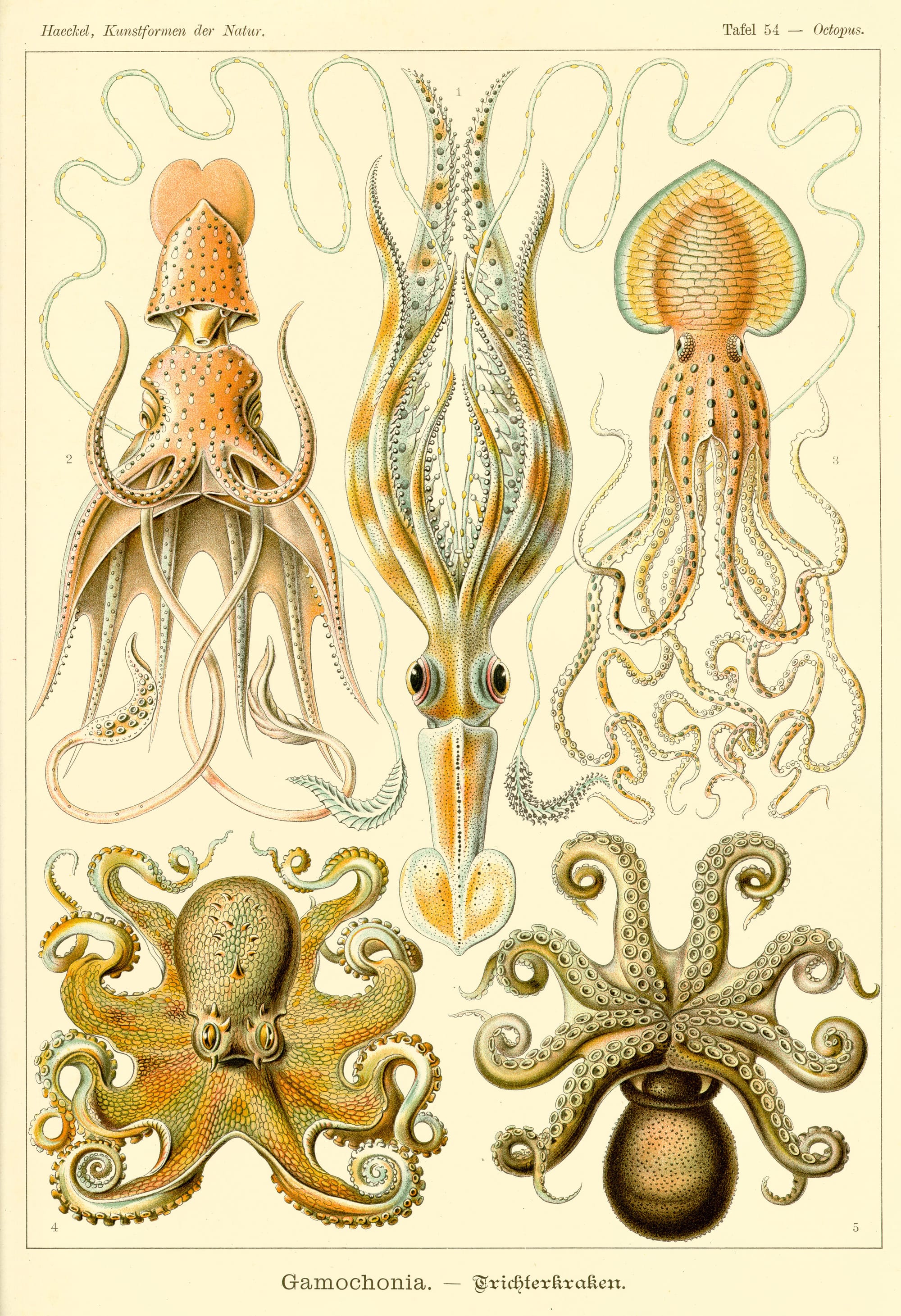
The third is the print or graphic itself. The strongest examples lean into one of two registers. Either soft glow-edge gradients on dark grounds — the kind of motion-blurred halo you get around a real photographed bioluminescent organism — or precise scientific-illustration linework reminiscent of a Haeckel plate, but rendered in cyan and violet against black. Pieces that try to combine both at once usually fail. Pick a register.
Wearing it without the costume problem
This is where I think most people overshoot. The aesthetic has a strong gravitational pull toward "club only" or "costume only," and the easiest way to defuse that is to treat the bioluminescent piece as a single statement element in an otherwise quiet outfit. One graphic tee in the abyssal palette, paired with straight black denim and a charcoal overcoat, reads as fashion. The same tee paired with anything else in the same colour family reads as cosplay. The chromatic restraint is the whole trick.
A second trick is to think in terms of where the light would be on a real organism. On most deep-sea animals, the bioluminescence is concentrated along edges or in clusters — the ventral row of photophores on a hatchetfish, the lure tip of an anglerfish, the bell rim of a jellyfish. A garment that places the glow-effect at the hem, the cuff, or in a single mid-chest cluster reads as biological. A garment that scatters glow everywhere reads as costume. This is one of those rare cases where mimicking nature literally produces a better aesthetic outcome than improvising.
Daytime works. The reference does not actually need to glow in the dark to land. A matte black hoodie with cyan-glow print, worn at a desk under daylight, reads as fashion-forward rather than nocturnal. Saving the piece for night is a self-imposed constraint that does not reflect how the colour palette actually behaves in mixed lighting.
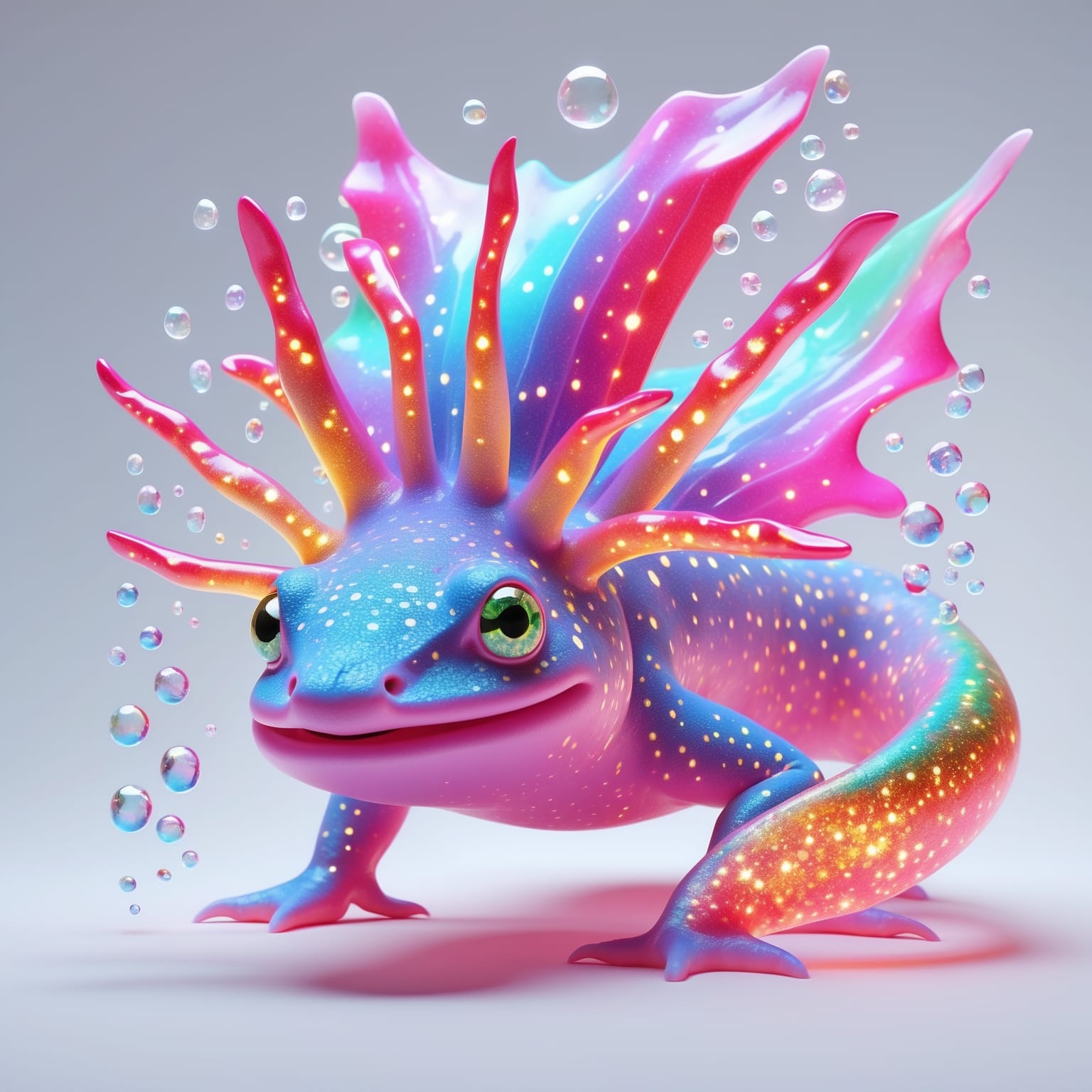
The team here at The Design Drop spent most of the last six months on a capsule that explores these codes — a series of original illustrations of deep-sea organisms (anglerfish, giant squid, axolotl-derived chimeras, an entirely invented coral-reef entity) printed in the abyssal-blue and phosphorescent-violet range on dark blanks. We released it as our Abyssal Glow collection, and the giant squid tee in particular is, in a small way, our own attempt at answering Edie Widder's footage. Not the aesthetic she discovered — the aesthetic she gave the rest of us permission to take seriously.

We did not write this piece to sell you that capsule, though. We wrote it because we kept being asked, in the studio and in DMs, why does this keep coming back? — and the honest answer is that humans have been obsessed with self-illuminating things since we had words for them. The deep sea is just the place where that obsession is hardest to dismiss. It has been glowing the entire time. We are only now starting to look closely.
Sources we leaned on while researching this piece: Edie Widder's Medusa work and the 2012 giant squid footage, written up at phys.org and National Geographic; the MBARI 2017 quantification study in Scientific Reports; the Nature feature on Iris van Herpen's Sympoiesis collection; the Smithsonian Ocean Portal on anglerfish bacteria; and the Personal Aesthetics Wiki entry for abyssalcore, for the taxonomy as the community itself uses it.
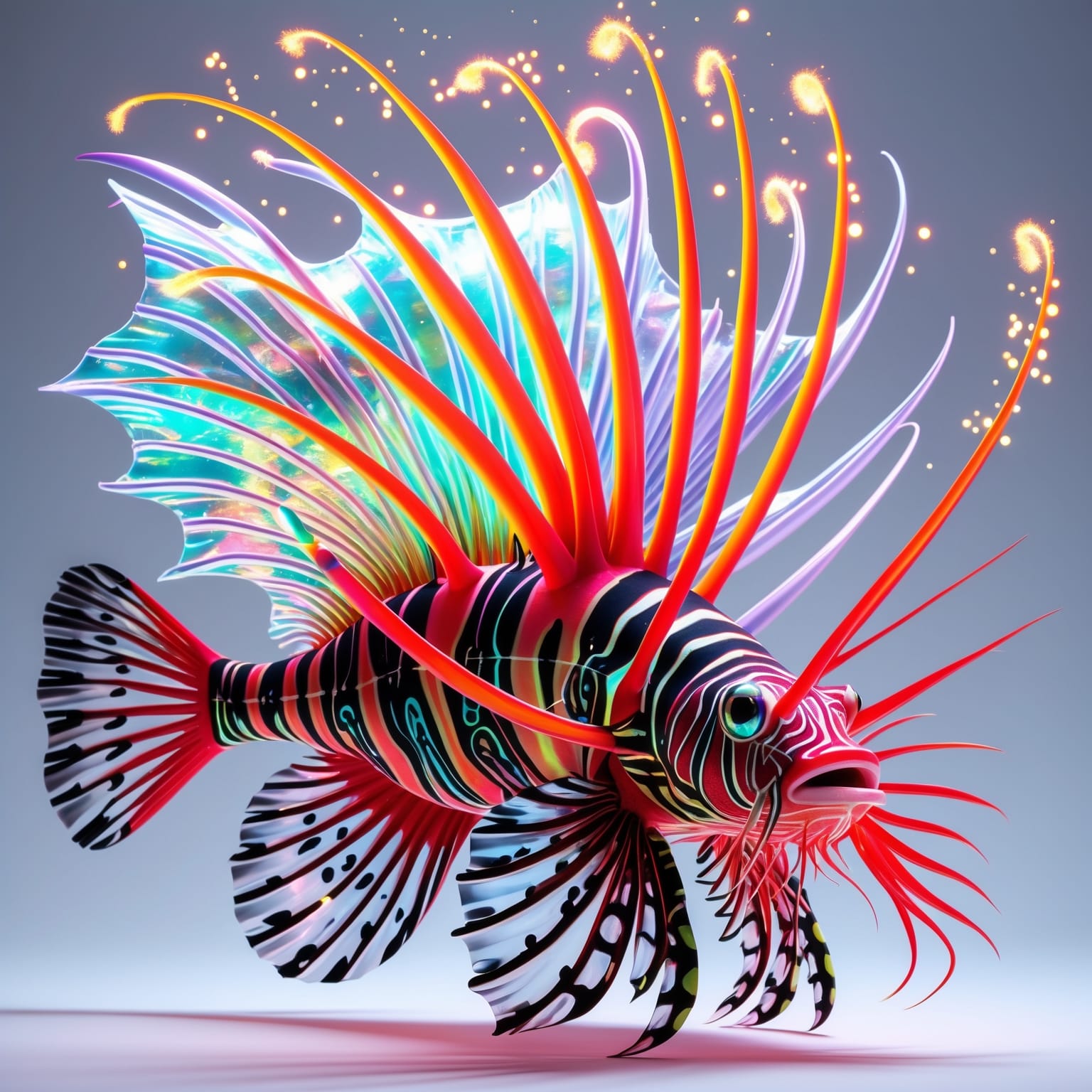
A note on production. This piece was researched and drafted with AI assistance — Claude, an AI assistant by Anthropic, was used for research synthesis and drafting; the prose was then edited and fact-checked by Dave Dion-Labrecque before publication. The deep-sea-organism illustrations from our studio archive (giant squid, jellyfish trio, lionfish, axolotl, and the capsule mockup) are original AI-generated artwork produced as part of our Abyssal Glow capsule. The historical and scientific images — Haeckel's Gamochonia plate, the NOAA Atolla photograph, and the Melanocetus johnsonii illustration — are public-domain or Creative Commons archival sources, credited under each figure.