
The Crystalcore Aesthetic: Forty Thousand Years of Meaningful Rocks

By Dave Dion-Labrecque - Updated June 2026 - 8 min read
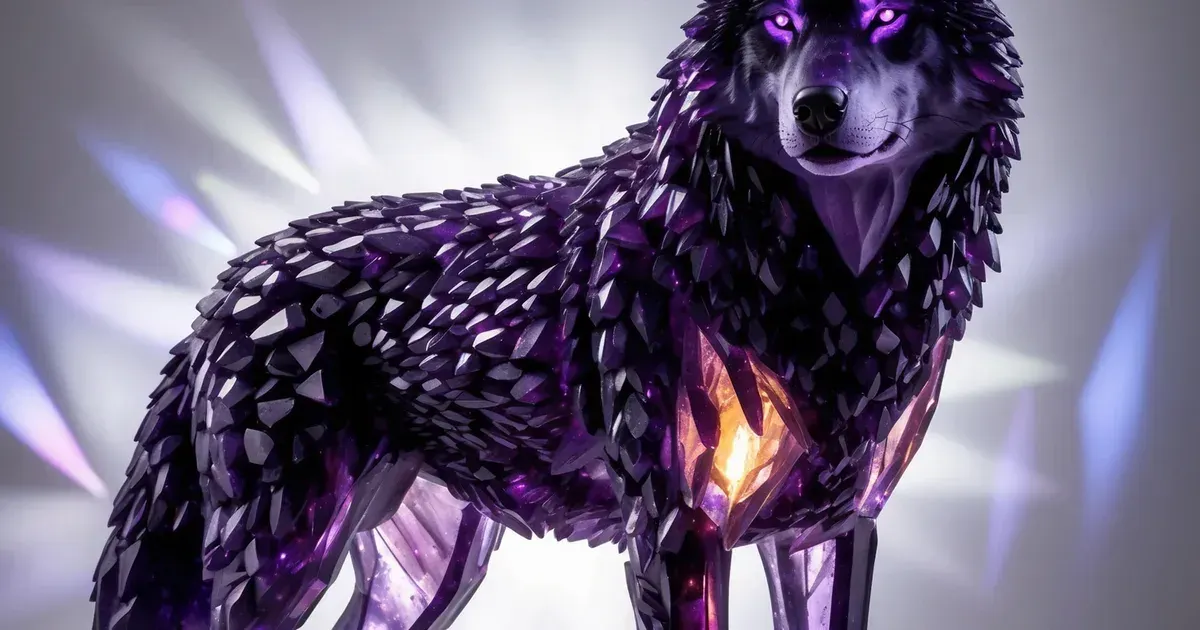
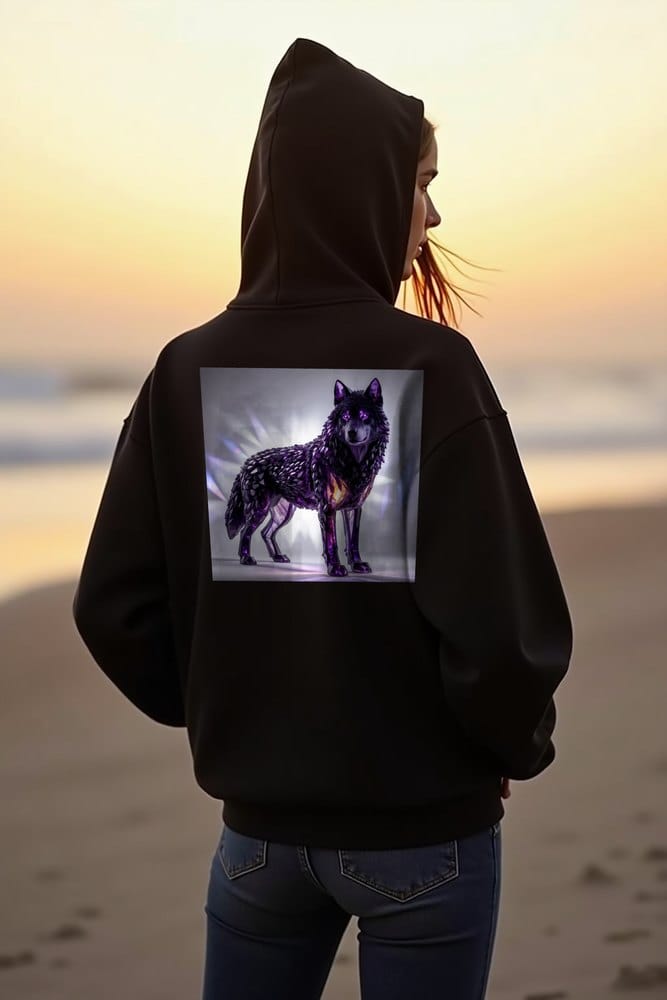
Last Tuesday I spent twenty minutes staring at a wolf made of amethyst. It was one of our own renders, frozen mid-stride on my second monitor, light pouring through its chest like the whole animal had swallowed a lantern. My coffee went cold. What got me was not the wolf; it was realizing I was doing the exact thing humans have done for forty thousand years: looking at a purple rock and deciding it meant something. That reflex is the engine behind the crystalcore aesthetic, the Pinterest-fueled revival of gems, geodes and faceted light that has quietly colonized Gen Z moodboards. Crystalcore looks new. It is, by a comfortable margin, the oldest aesthetic we have ever covered on this blog, and tracing its lineage from cave burials to museum vaults to your For You page explains a lot about why it refuses to die.
The original pocket rock: forty thousand years of carried minerals
Long before anyone wrote a word, someone drilled a hole in a cave bear tooth in the Altai Mountains and wore it. Archaeologists treat that perforated tooth, and thousands of objects like it, as amulets: things carried not for what they do but for what they promise. The Britannica entry on amulets traces the habit through nearly every civilization that left us anything to dig up. Mesopotamians engraved agate and lapis lazuli to keep spirits at bay. Romans matched stones to gods the way we match stones to zodiac signs. The logic barely changed; only the price of admission did.
Egypt is where the mineral obsession got institutional. Lapis lazuli arrived by caravan from what is now Afghanistan, a supply chain of staggering ambition for the Bronze Age, all so that scribes and priests could wear a stone the color of the night sky. Scarabs carved from it were tucked into bandages of the dead as insurance for the soul's commute.
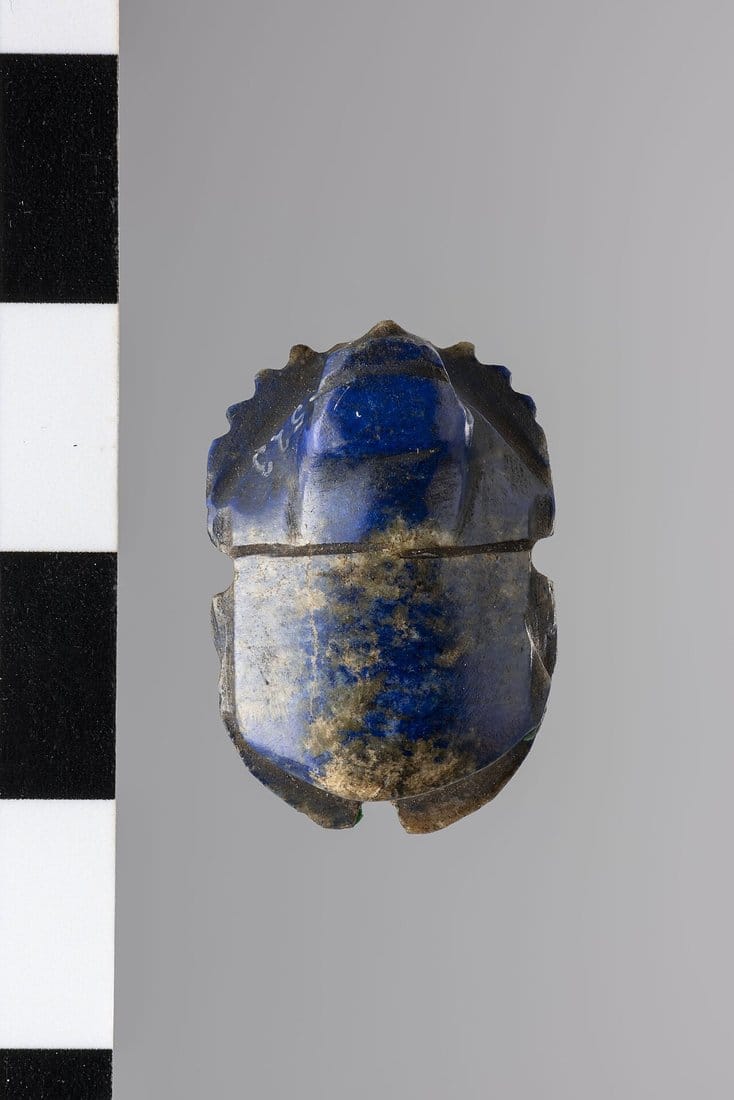
Notice what the scarab is not. It is not naturalistic. The falcon head is stylized, the geometry deliberate, the material doing most of the talking. Swap the workshop in Thebes for a design studio in 2026 and the brief would read almost identically: take an animal, rebuild it in a precious mineral, let the stone carry the meaning. We will come back to that.
Cursed stones and museum glass
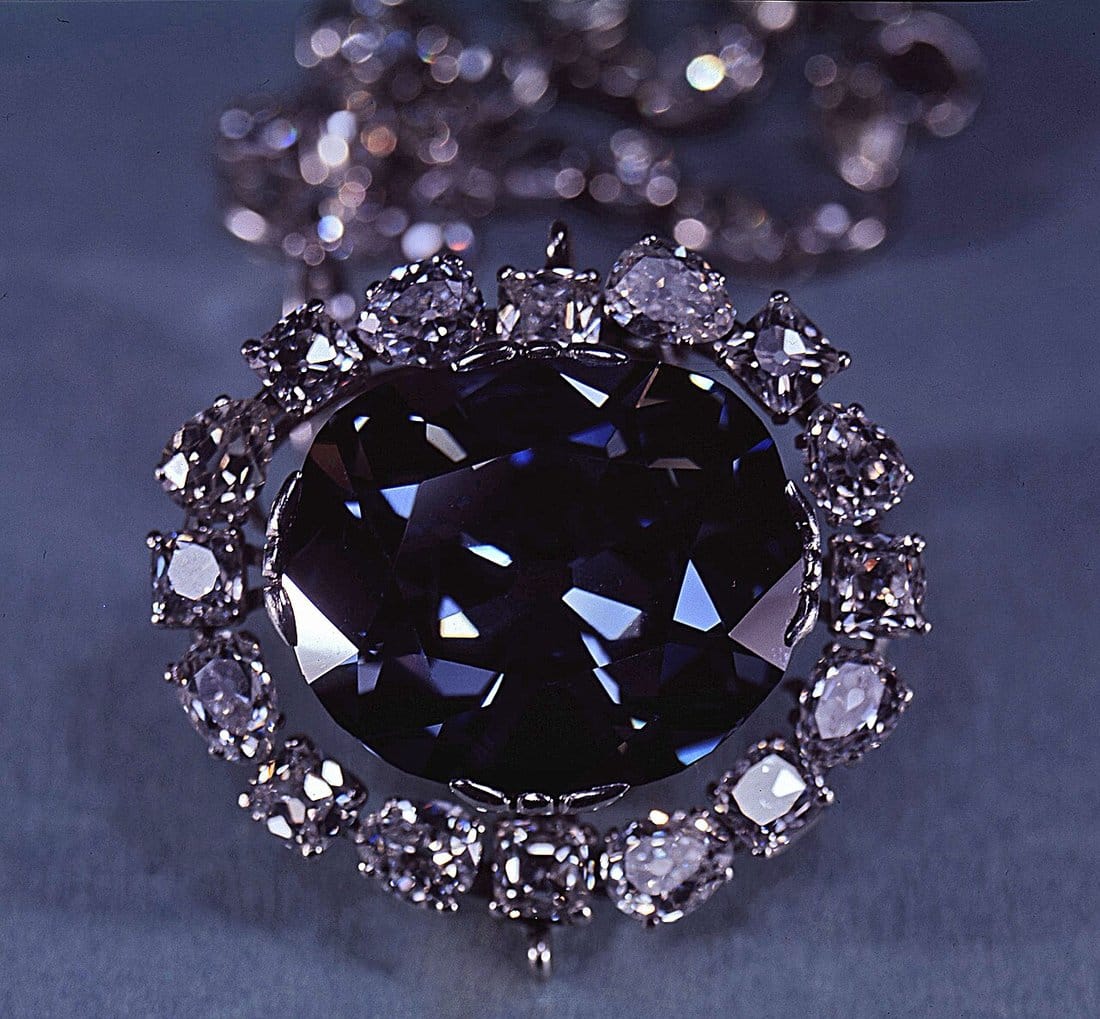
Fast forward to the modern era and the stones got biographies. The most famous is a 45-carat blue diamond that has outlived every owner it supposedly ruined. The Hope diamond's documented history runs from a French merchant in the 1660s through Louis XIV, revolutionary theft, London bankers and an American heiress who pinned it to her dress at parties, before it landed at the Smithsonian in 1958, mailed there in a plain brown paper package. The curse story is Victorian marketing, mostly invented by jewelers and newspapers. It worked because people wanted it to be true. A rock with a story beats a rock with a spec sheet.
The nineteenth century industrialized this kind of mineral storytelling. Victorians wore acrostic jewelry where the first letter of each gem spelled out secret words (a Lapis, an Opal, a Vermeil garnet, an Emerald: love). Then in 1912 the American National Association of Jewelers standardized the birthstone list, and suddenly every human being on earth had been assigned a rock at birth. It was a trade-association invention dressed as ancient tradition, and it stuck so hard that most people today assume Moses handed it down. The lesson for anyone who studies aesthetics: mineral symbolism has always been part folklore, part supply chain.
The New Age detour that refused to end
If you grew up anywhere near the 1980s you remember where this went next: crystal healing, dog-eared paperbacks about vibrational frequencies, amethyst clusters on windowsills from Sedona to Saguenay. The scientific case never materialized; controlled studies kept finding that a glass fake produced the same reported tingles as the real quartz. And yet the aesthetic outlived the pharmacology. People kept the rocks after they stopped believing the claims, which tells you the claims were never really the point.
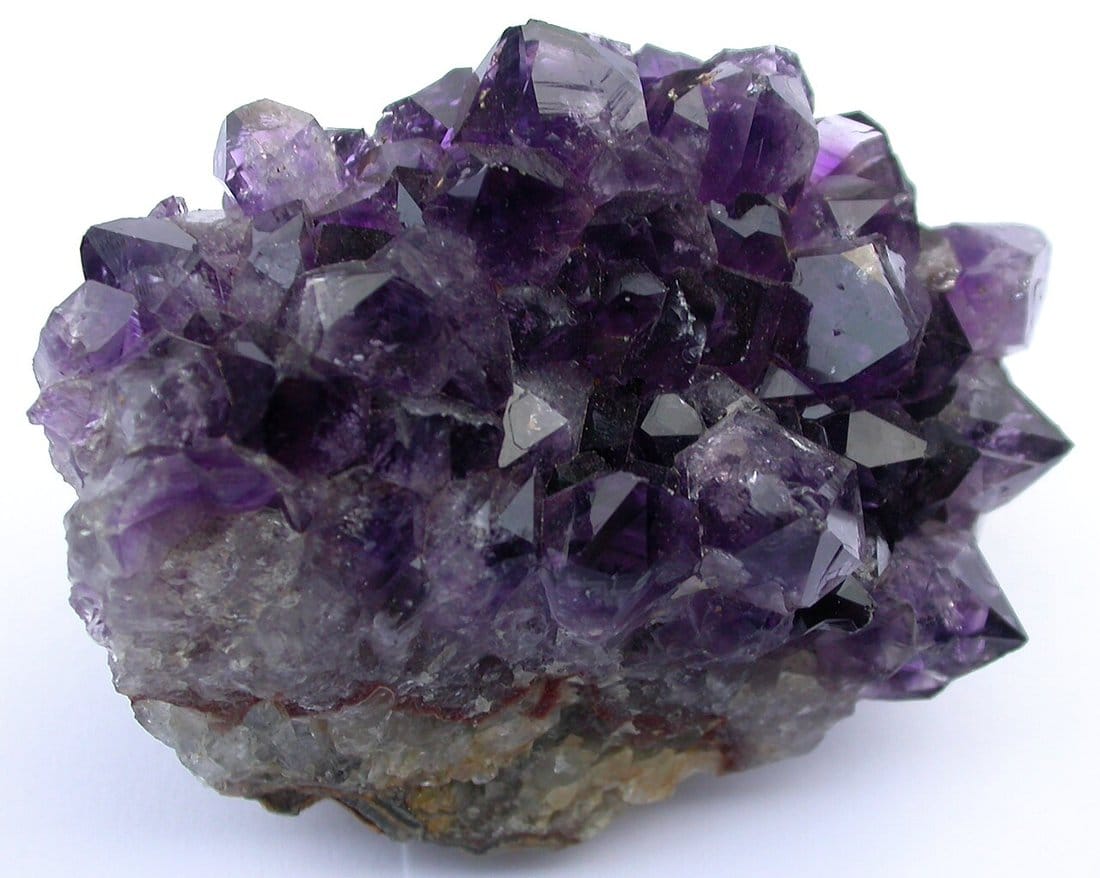
Here is the thing the skeptics and the healers both missed. A crystal is one of the very few objects in nature that looks designed. The hexagonal terminations of quartz are not carved; they are just chemistry being unusually tidy. In a world of organic blobs, a mineral is a found artifact of pure geometry, and humans have never been able to leave that alone. We wrote about a similar instinct in our piece on why deep-sea light keeps hijacking design culture: when nature does something that looks engineered, we treat it as a message.
Crystalcore: the moodboard generation picks up the stones
Which brings us to now. Sometime around the start of this decade, the tag crystalcore began consolidating on Pinterest and Tumblr: geodes shot in macro, iridescent jewelry, raw clusters on velvet, outfits keyed to the palette of a specific stone. By this spring the boards we track had stopped reading as witchy niche and started reading as a full visual language. Pinterest's own trend pages now file crystal aesthetics alongside heavyweight categories like dark academia, and the auction world has noticed the same drift from belief to identity: Sotheby's analysis of why younger buyers choose colored gemstones found Gen Z picking stones by birth chart and personal symbolism rather than by carat math.
That tracks with everything we have watched aesthetics do over the past year. The same generation that turned empty malls into a feeling with dreamcore and the liminal-space wave, and that swapped cottagecore's picket fences for the feral edges of wilderkind nature fashion, keeps reaching for imagery that feels older and stranger than the feed it scrolls past on. A crystal is exactly that. It is the anti-content: an object that took ten million years to render.
There is also a harder, material read. Gen Z came of age inside screens, where everything is duplicable and nothing has weight. A mineral is the opposite proposition. It is singular, heavy, slow and unprintable. When a nineteen-year-old buys a carnelian ring because it matches her Mars placement, she is doing what the Theban scribe did with his lapis scarab: outsourcing a piece of identity to geology, because geology does not crash, update or get deleted.
Why faceted light reads as honest design
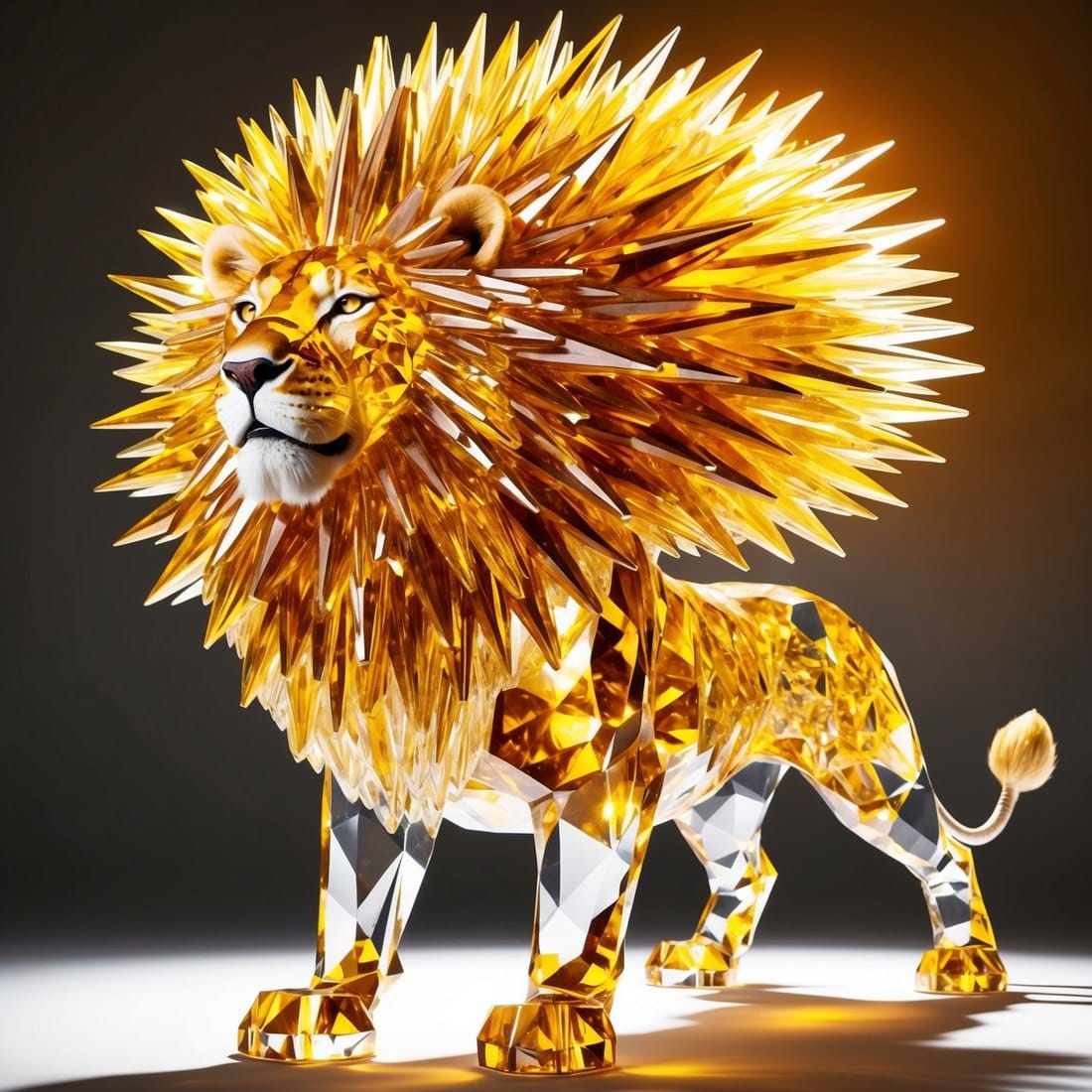
In our studio the crystal brief turned out to be the most technically interesting one we have run this year. Faceted material is unforgiving. Every plane has to catch light from a consistent source or the eye flags it instantly as fake; we threw out almost a third of our renders for exactly that crime. What survived taught us the grammar of the aesthetic. Refraction implies interiority: a glow from inside the chest of a crystal animal reads as a soul the way flat color never does. Geometry implies intention: hexagonal terminations along a spine feel grown rather than sculpted. And translucency implies honesty, the sense that the object hides nothing because you can literally see through it.
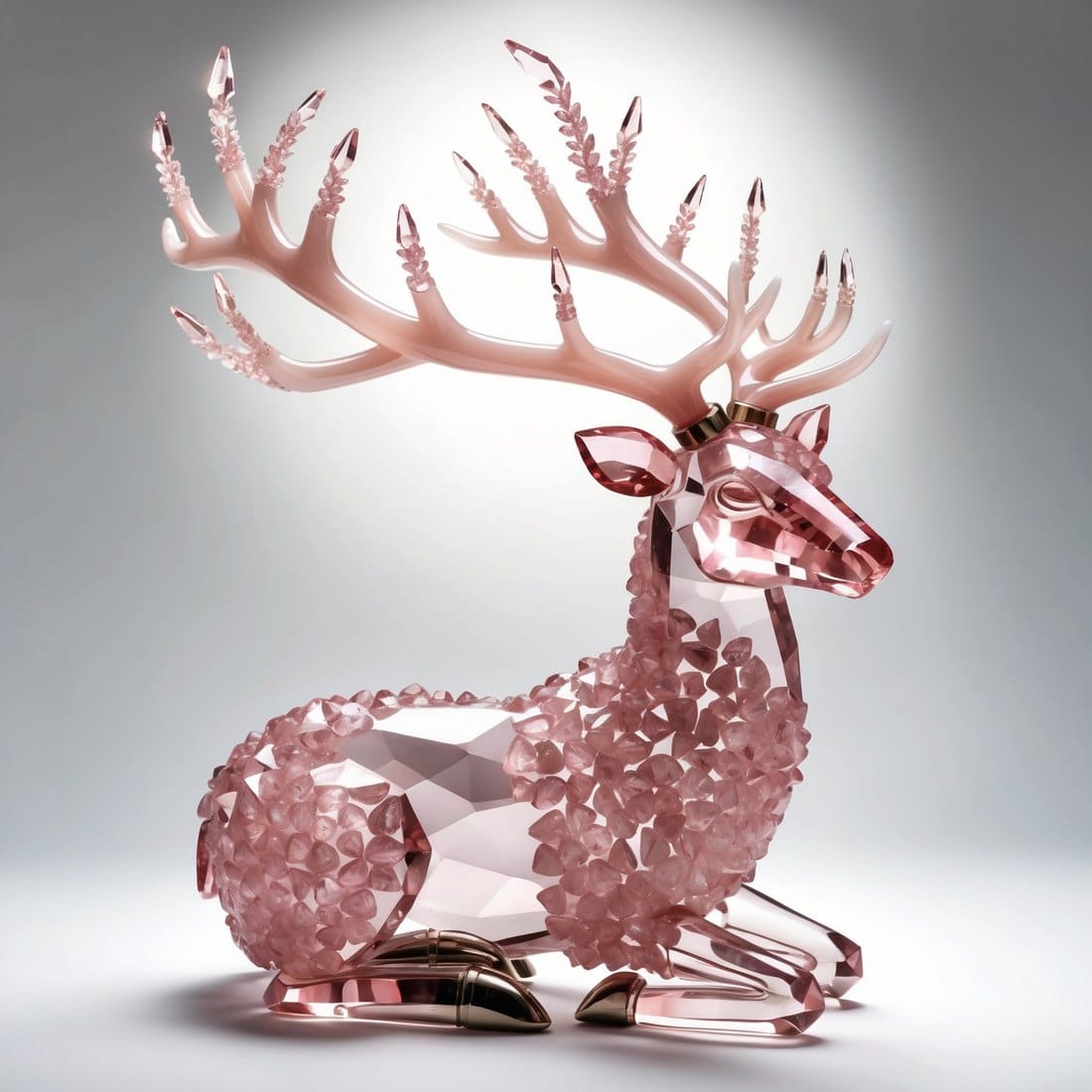
Those three rules explain the whole crystalcore canon, from museum gems to macro geode photography to the jewelry stacking trend currently eating TikTok. They also explain its emotional temperature. Crystalcore is not cozy like cottagecore or melancholic like dreamcore. It is aspirational in a strangely durable way: the fantasy is not escape but permanence. You are not invited to live inside the image. You are invited to outlast something.
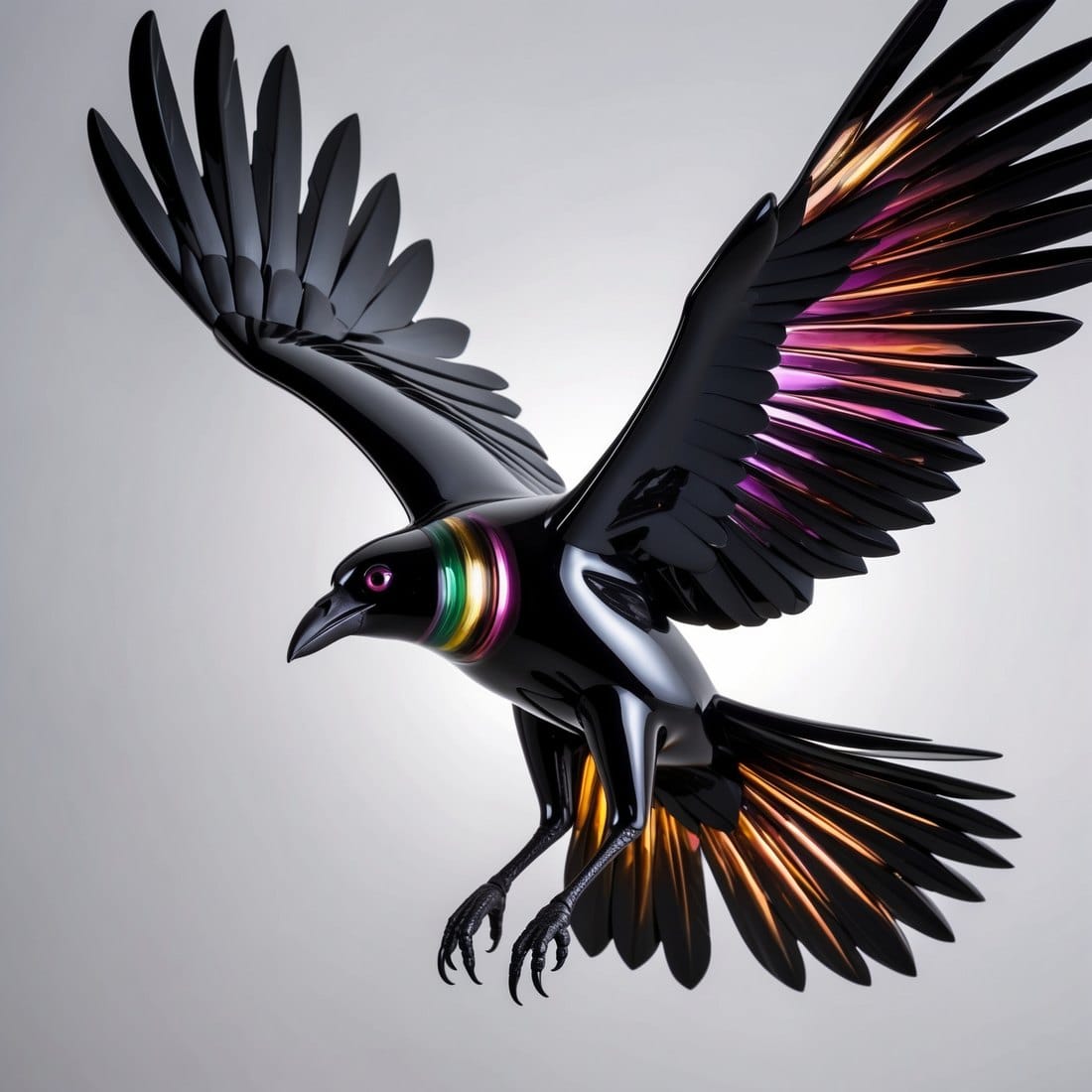
If you want to test the thesis yourself, do what I did with the wolf. Find any crystal image, real or rendered, and ask what it is promising you. It will not be softness and it will not be nostalgia. It will be some version of: this lasts. Forty thousand years of pocket rocks suggest the promise still sells.
From the studio
The renders scattered through this article come from Prismatic Beasts, the collection that started as our internal experiment in those three rules of faceted light. Fifteen animals, each rebuilt in a single mineral, from the amethyst wolf that opened this piece to a moonstone leopard we nearly kept for the studio wall. If the crystalcore palette speaks to you, the full set of crystal animals lives on our shop, printed on heavyweight tees and hoodies.
FAQ: crystalcore in brief
What is the crystalcore aesthetic?
Crystalcore is a visual style built around gemstones, geodes, faceted light and mineral palettes: macro crystal photography, iridescent jewelry, and art or fashion that borrows the geometry of raw stones. It overlaps with witchy and fairy aesthetics but leans harder on light and structure than on ritual.
Where does crystal symbolism come from?
From amulet traditions documented across Mesopotamia, Egypt, Greece and Rome, where specific stones were assigned protective or spiritual roles. The modern birthstone list, by contrast, was standardized by American jewelers in 1912.
Is crystalcore the same as crystal healing?
No. Crystal healing is a belief system about wellness effects that controlled studies have not supported. Crystalcore is an aesthetic: it borrows the imagery and the symbolism while staying agnostic about the metaphysics.
🎨 Original designs featured in this article are AI-generated and curated by The Design Drop. External photographs and illustrations are credited individually where used.
Love what you see?
Get free designs, exclusive deals & curated gift guides every week.
Subscribe to The Design Drop - it's free!