
Solarpunk Aesthetic: 2026's Most Hopeful Eco-Futurist Look
How Art Nouveau, biomimicry and Ghibli-style optimism turned solarpunk into 2026's most hopeful visual movement.

By Dave Dion-Labrecque - Updated June 2026 - 8 min read
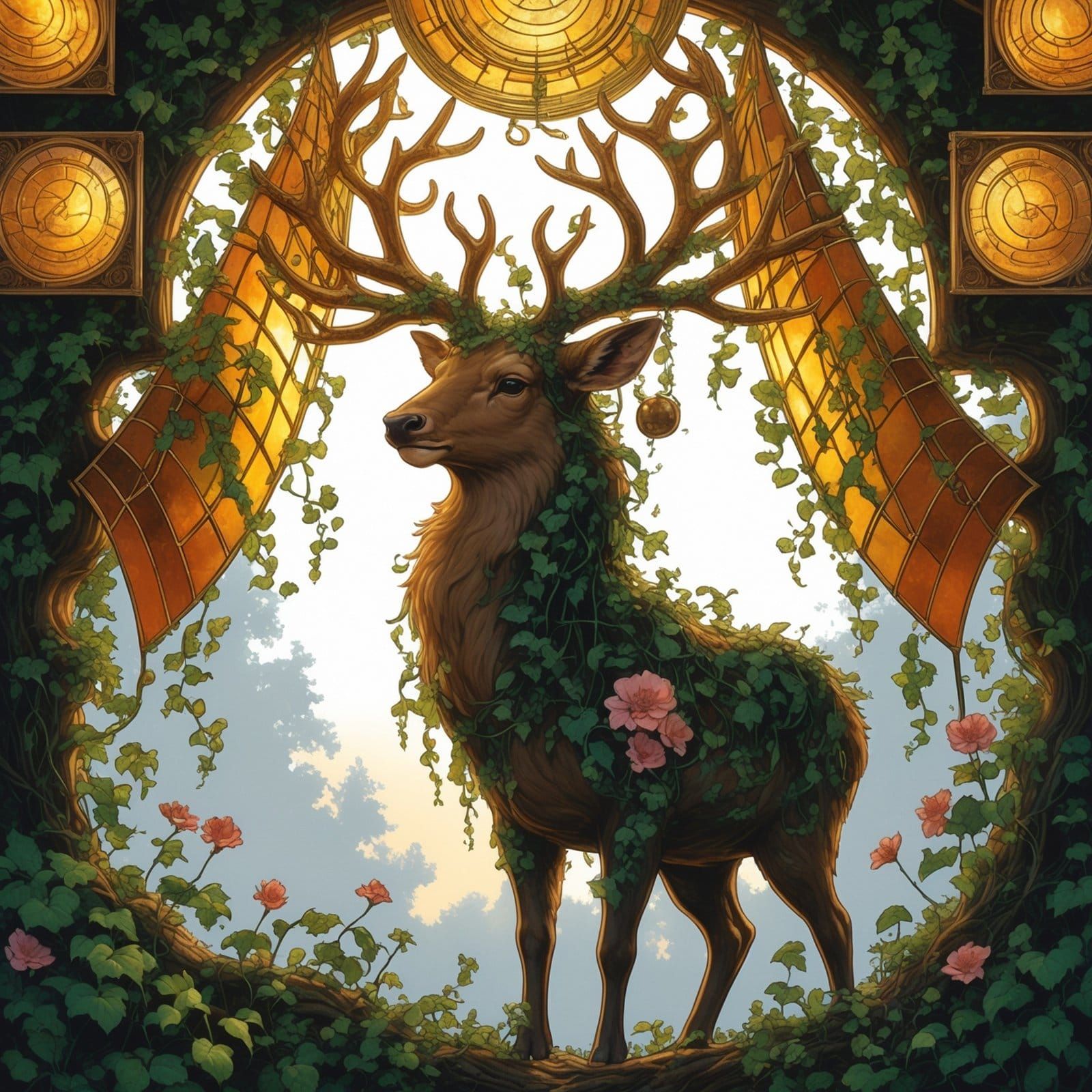
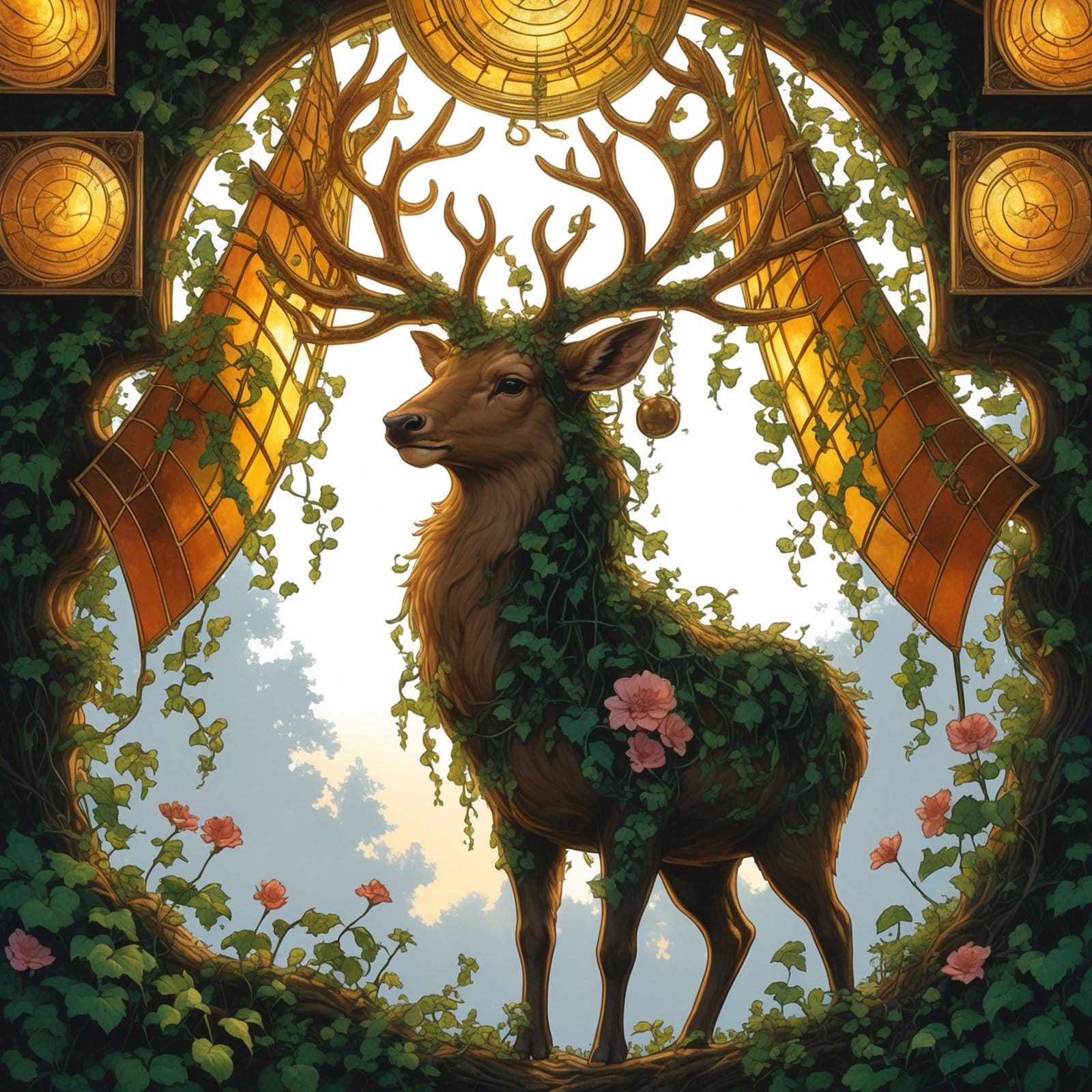
A few weeks ago one of our designers handed me a sketch of a stag whose antlers had quietly turned into panes of stained glass, each one angled to catch the light like a little solar sail, ivy climbing the bone. I kept staring at it. It was not quite fantasy and not quite science fiction; it was a creature that looked like it had grown its own power grid. When I asked what the file was called, the answer was the whole point: solarpunk. That sketch is what sent me down a months-long rabbit hole into the solarpunk aesthetic, the most stubbornly hopeful visual movement I have watched build in years.
Most aesthetics we cover are about mood or nostalgia. This one is different. Solarpunk is an argument about the future dressed up as a picture, and once you can see the argument, you cannot unsee it.
Where solarpunk actually came from
The word is younger than people assume. It first showed up around 2008 in a blog post titled "From Steampunk to Solarpunk," floated almost as a dare: if steampunk could build a whole world out of brass and coal-smoke nostalgia, why not build one out of sunlight and repair? The idea simmered on Tumblr and in small Brazilian science-fiction circles for a few years before it found its spine in 2014, when a short text called "Solarpunk: Notes toward a manifesto" gave the movement its now-famous thesis. The future, it insisted, did not have to be a smoking ruin. We could choose the other story.
That choice is baked into the name. The "solar" is literal, all renewable energy and daylight, but it also stands for optimism as a deliberate stance rather than a personality trait. The "punk" is the part people forget. It signals do-it-yourself, anti-corporate, decolonial, a refusal to wait for permission. If you want the encyclopedic version, the broad overview of the movement's history traces it from those early blog posts through manifestos, anthologies, and a sprawl of online art. What matters for us is that solarpunk was a literary and political idea first and a look second. The pictures came to carry the argument.
The look: Art Nouveau with solar panels bolted on
If you want to understand why solarpunk imagery feels both old and new at once, look at what it borrows. The movement reaches past the entire twentieth century and lands on Art Nouveau, the turn-of-the-century style of whiplash curves, vines, and ornamental ironwork. Where cyberpunk loves a hard right angle, solarpunk loves a tendril. You see it in the stained-glass framing, the botanical borders, the way a wind turbine gets drawn with the same loving curve an Art Nouveau poster would give a woman's hair.
There is a second ancestor too, and it is British: the Arts and Crafts movement, William Morris and his insistence that beautiful, well-made objects were a moral position, not a luxury. The museum record of Arts and Crafts reads almost like a solarpunk pre-print: honest materials, visible craftsmanship, a quiet revolt against the smoke and speed of industrial life. Swap Morris's loom for a 3D printer and a community solar co-op and you are basically there. The palette follows from all this. Solarpunk runs warm and green: brass, terracotta, moss, the amber of late-afternoon light, blues that read as sky rather than screen. It is the color story of a greenhouse, not a server room.
Why it keeps borrowing from animals
Here is the part that hooked our studio. Solarpunk almost never draws a machine on its own. It draws a machine that has learned to behave like an organism, and very often it just draws the organism and lets the technology grow out of it. That instinct has a name in engineering: biomimicry, the practice of solving design problems by copying what evolution already worked out. The classic real-world example is a shopping center in Harare, the Eastgate Centre, that cools itself without conventional air conditioning by imitating the way termite mounds breathe. Architects measured the bugs and built the building.
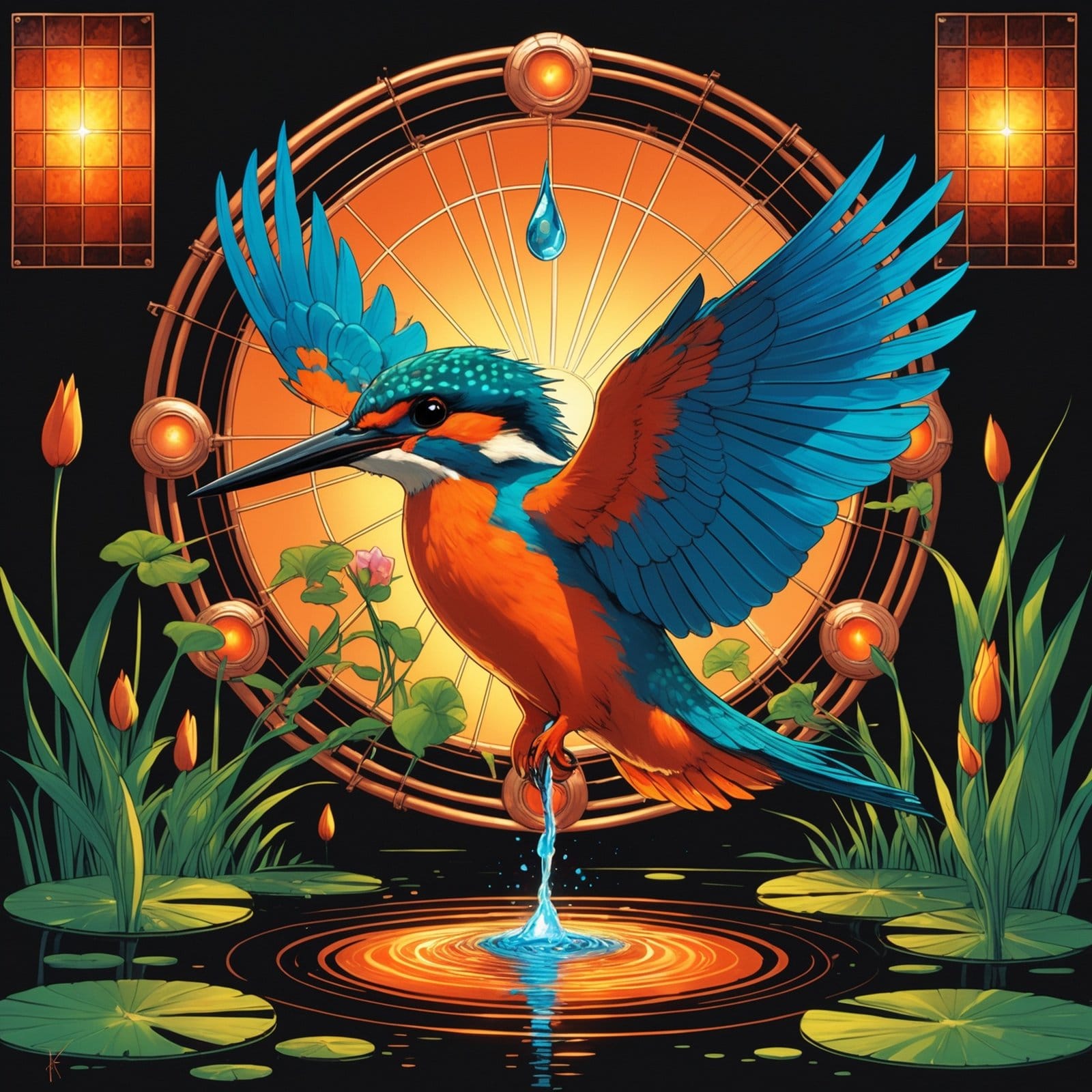
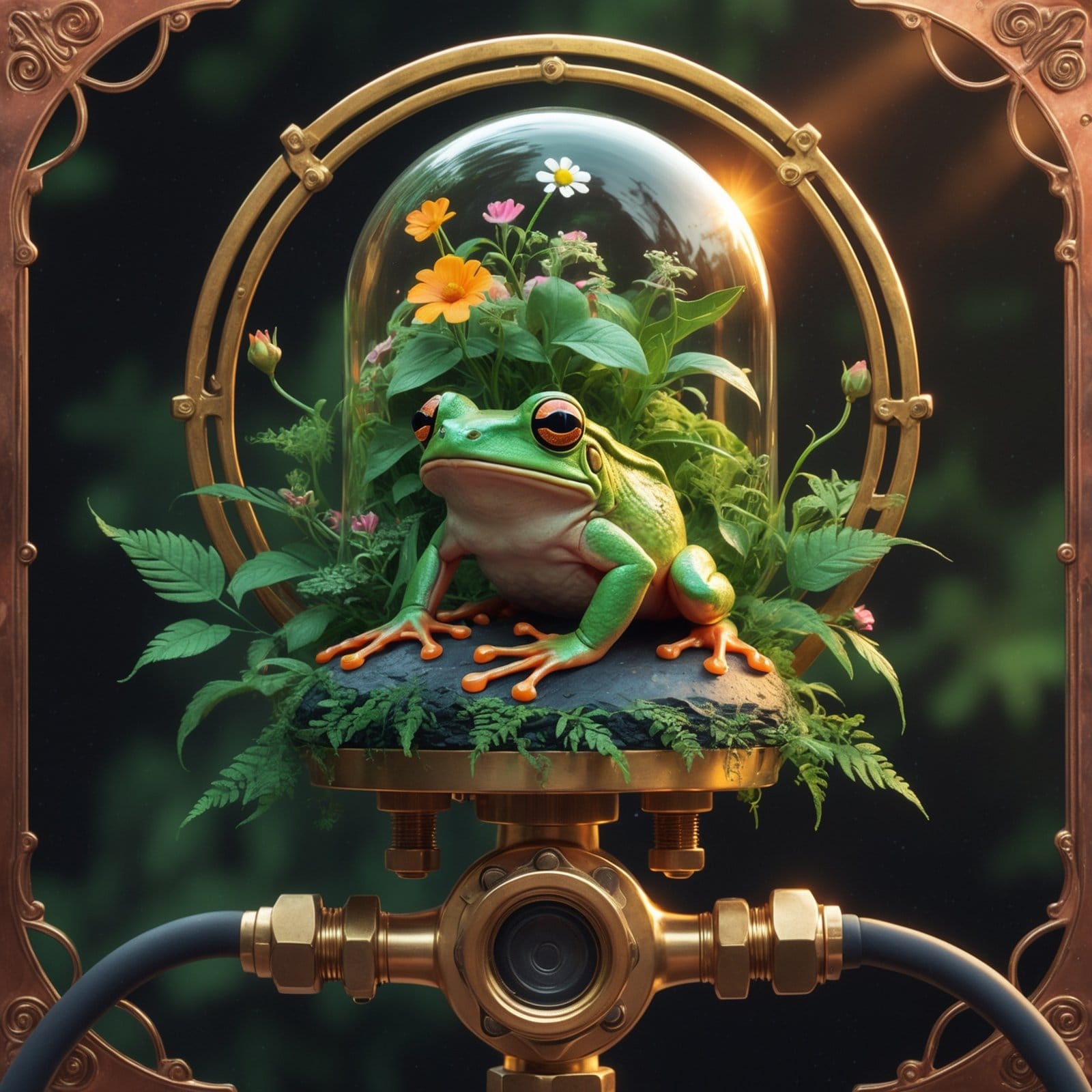
Solarpunk takes that logic and runs it straight into the visual language. A kingfisher's wing becomes a copper wind turbine. A frog carries a tiny domed greenhouse on its back. The point is not that these are plausible blueprints; the point is the worldview they smuggle in, which is that technology should be something nature could plausibly have grown rather than something stamped out and bolted on. We have written before about the way the deep sea became a design language of living light, and solarpunk shares that DNA. Both treat biology as the most advanced technology in the room.
The Ghibli of it all
You cannot talk about solarpunk imagery for long before someone says the word Ghibli, and they are right to. Hayao Miyazaki was drawing solarpunk worlds decades before the term existed. "Nausicaa of the Valley of the Wind" came out in 1984 and "Castle in the Sky" in 1986, both of them full of green cities, gentle machines, and a deep suspicion of anyone who wants to dominate the natural world. A good museum survey of solarpunk on screen puts Miyazaki right at the headwaters of the look.
What he brought, and what solarpunk inherited, runs deeper than pretty backgrounds. There is a current of Shinto animism in those films, the sense that rivers and forests and even tools have a kind of spirit worth respecting, and an echo of satoyama, the Japanese tradition of land managed so that people and wildlife share it. That is why solarpunk art so rarely feels sterile. It is not imagining a clean future where nature has been tidied away. It is imagining a crowded, mossy, slightly wild future where the line between the built and the grown has gone soft on purpose.
Solarpunk is cyberpunk's argument, flipped
The fastest way to explain solarpunk to anyone is to hold it up against its older sibling. Cyberpunk gave us forty years of the same warning: high tech, low life, rain-slicked megacities owned by corporations, a future where the machines won and we lost. Solarpunk looked at all of that and asked a quietly radical question. What if we used the same technology and chose not to be miserable?
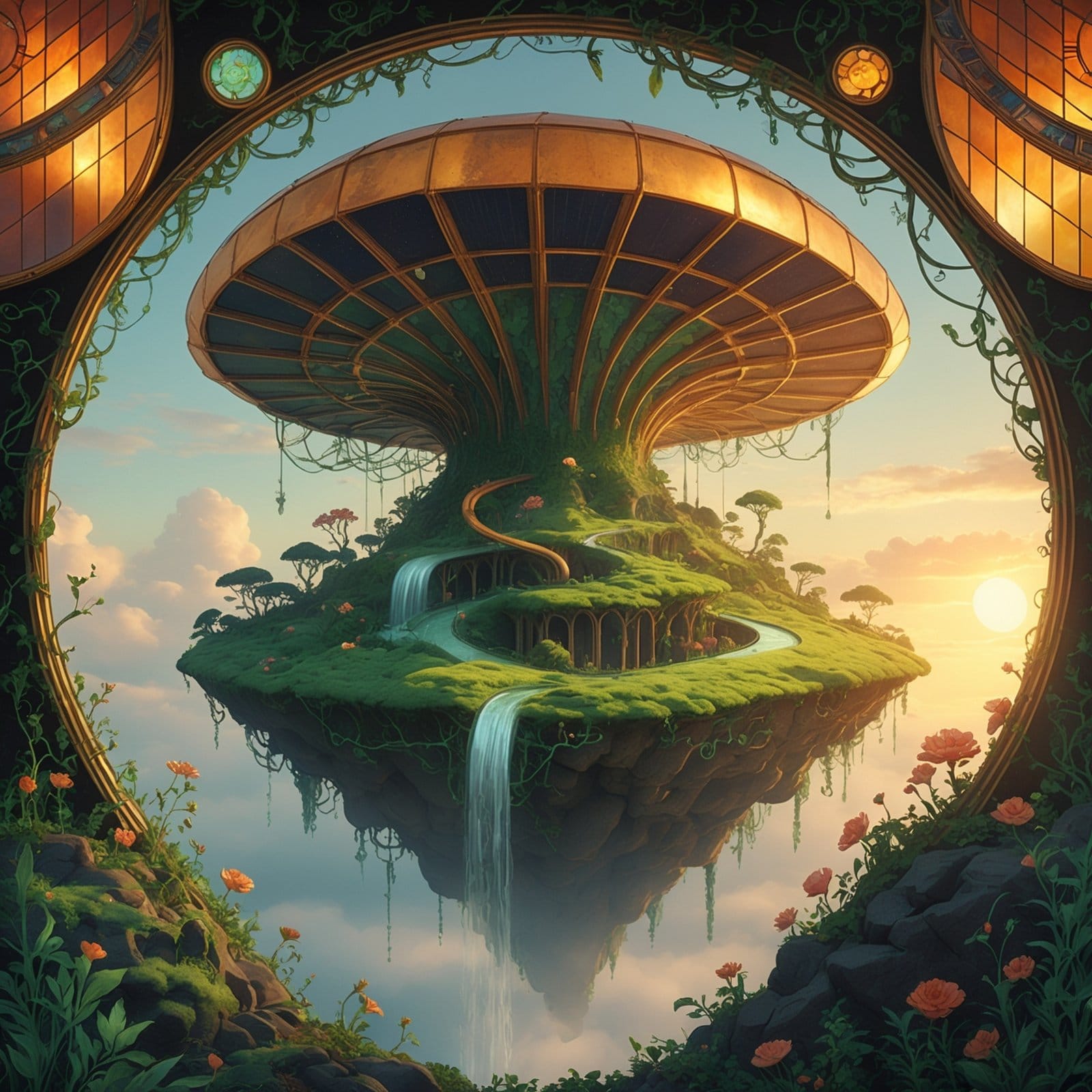
So the city changes. Instead of a black tower streaming ads into the smog, you get a terraced structure dripping with gardens, water moving through it, light coming in. We spent a recent piece sorting out two backward-looking futures in our breakdown of how the atomic and diesel retro-futures differ, and solarpunk is the forward-looking answer to both. It keeps the technological ambition and throws out the despair. That single swap, from dread to hope, is the entire engine of the aesthetic.
The criticism worth taking seriously
I would not trust anyone selling you solarpunk as a flawless utopia, so here is the honest part. The movement's loudest critics, many of them sympathetic insiders, point out that a lot of what gets posted under the tag is aesthetic-first and politics-never. A glass tower with a few token trees on the balconies is not solarpunk; it is a luxury development with good PR, and calling it green can be a way of greenwashing the same old displacement. The look is easy to copy. The values underneath, the part about community ownership, repair, and justice, are easy to leave out.
I think that critique is healthy, and it is exactly why we treat solarpunk as inspiration rather than a costume. The imagery is gorgeous, but the gorgeous part is supposed to be in service of the argument, not a replacement for it. A drawing of a self-cooling building does not cool anything. It is a promissory note, and the movement is at its best when it remembers that.
Why it is surfacing now, in 2026
Trend forecasters have been circling this territory all year. Pinterest's 2026 predictions are thick with nature-optimism: woodland motifs, biophilic patterns, an aesthetic the platform has been calling wilderkind, with searches for animal-inspired and botanical looks climbing hard. We dug into one branch of that in our piece on how nature's role in fashion split into rival looks. Solarpunk is the most forward-facing member of that family. Where cottagecore retreats into an idealized past and wilderkind reaches for the wild present, solarpunk insists on the future, and insists it can be good.
My read is that the timing is not an accident. After a long stretch of doom-scrolling and climate dread, a generation is hungry for images that do not end in collapse. Solarpunk offers a picture you can actually want to live inside, which is rarer than it sounds. It belongs to the same impulse we traced in the way Gen Z built whole identities out of texture and symbol, the way we explored in our look at crystalcore and the meaning we load onto objects. People are not just decorating. They are choosing what to believe is possible.
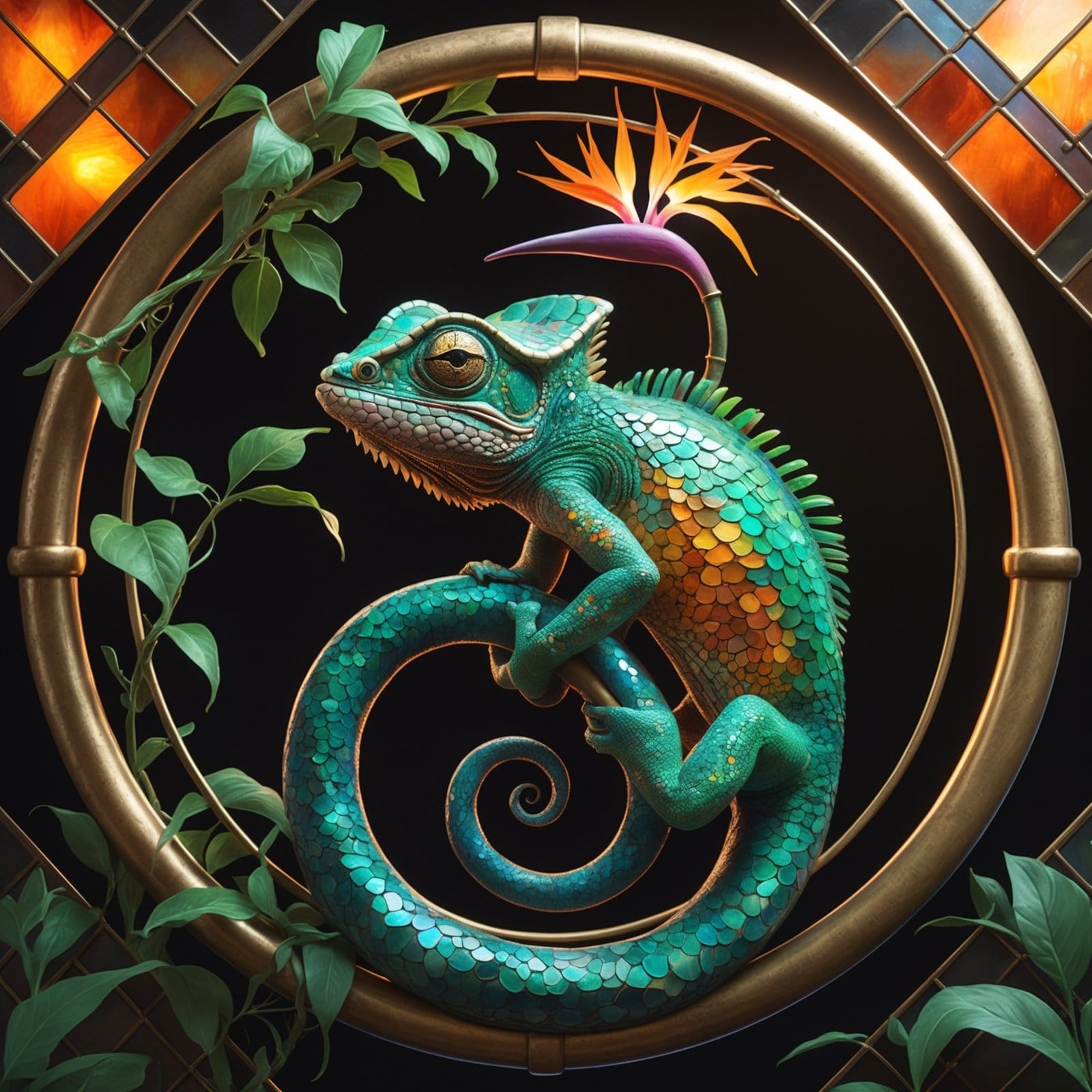
That belief is what we tried to bottle in our latest studio drop, Solar Reverie, a set of creatures built entirely on the solarpunk logic: a stag with stained-glass antlers, a turbine-winged kingfisher, a frog carrying its own greenhouse, a red panda wired for sunlight. They are not product mockups of a green future so much as small arguments for one. If reading about the look has you wanting to wear a little of that optimism, you can browse the full collection of solarpunk-inspired designs and see how the stained-glass-and-vines language translates onto something you can actually put on.

🎨 Original designs featured in this article are AI-generated and curated by The Design Drop. External photographs and illustrations are credited individually where used.
Love what you see?
Get free designs, exclusive deals & curated gift guides every week.
Subscribe to The Design Drop - it's free!